


Having thick, naturally wavy hair gives you something many hairstyles try to create artificially: body, movement, and texture. The challenge is that without the right haircut, all that density can collect in the wrong places, leaving the ends heavy, the sides bulky, or the overall shape wider than you want.
The best thick wavy haircuts do not try to flatten your texture. Instead, they direct it. Strategic layers can remove excess weight while allowing the natural bends to form more clearly, and thoughtful shaping can prevent the bottom of the haircut from becoming overly dense. Current stylist guidance for thick hair emphasizes removing weight in the right areas rather than thinning indiscriminately, while wavy-hair experts recommend cutting with the natural wave pattern in mind.
Your ideal cut will depend on your length, wave pattern, density, strand thickness, face-framing preference, and whether you normally air-dry, diffuse, or heat-style your hair. These 25 ideas cover long, medium, and short options so you can find a shape that works with your waves rather than fighting them.
1. Long Blended Layers
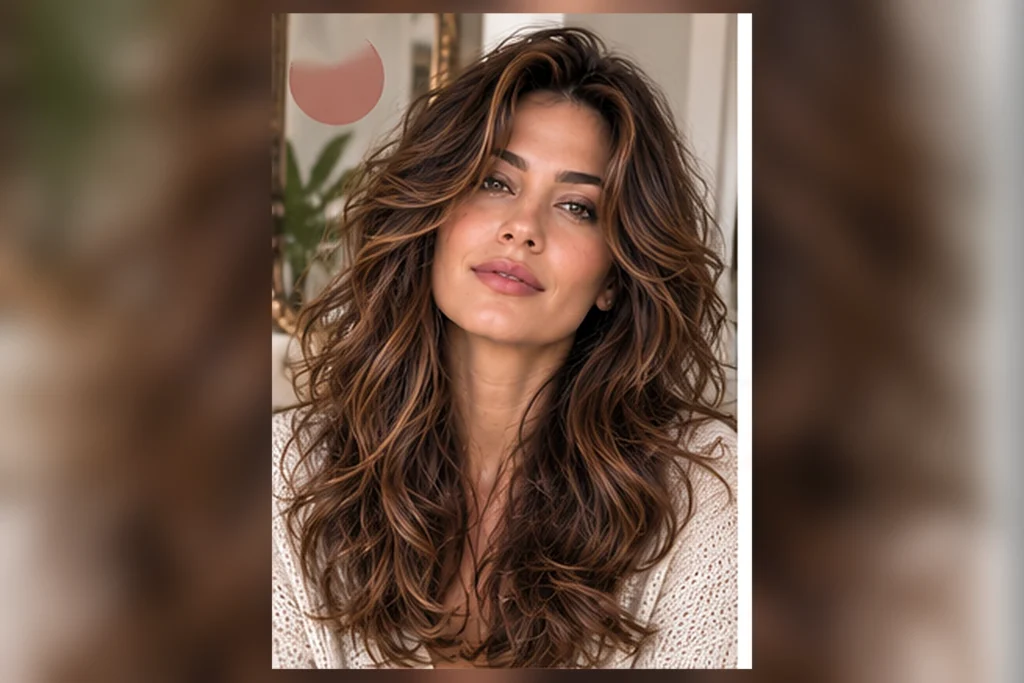
Long blended layers are one of the safest choices if you love your length but want thick wavy hair to feel lighter. Rather than creating lots of short pieces near the crown, the layers gradually remove weight through the middle and lower sections.
This allows the waves to separate instead of stacking heavily on top of one another. Keeping the transitions soft also helps maintain a substantial-looking perimeter, which is useful when you want movement without making the ends appear thin.
2. Butterfly Haircut for Thick Waves
A butterfly haircut combines shorter face-framing and crown layers with longer lengths underneath. On thick wavy hair, that structure can create lift while reducing some of the heaviness that builds through long hair.
The best results usually come from keeping the shortest layers long enough to work with your natural wave rather than cutting them so short that they puff outward. Styling the front pieces away from the face can emphasize the airy, wing-like shape.

3. Collarbone-Length Layered Cut
Collarbone length is a practical middle ground because it removes a substantial amount of weight while leaving enough hair for your waves to form naturally.
Soft internal and face-framing layers can keep the haircut from developing one dense horizontal line around the shoulders. It is also long enough to tie back, which makes it a versatile option if you want a noticeable haircut without committing to a bob.
4. Textured Wavy Lob
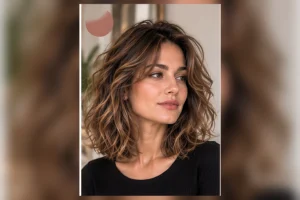
A textured lob sits somewhere between the chin and shoulders and works particularly well when you want shorter hair without losing your natural movement.
Instead of keeping the entire perimeter extremely blunt, subtle texturing and internal layering can help the waves form with less bulk. Avoid removing too much density at the very ends, though, because thick wavy hair often looks best when the perimeter still has some substance.

5. Long Shag for Thick Wavy Hair
A long shag uses shorter crown layers and progressively longer pieces through the rest of the hair, making it especially compatible with naturally wavy texture.
The wave pattern naturally shows off the different layer lengths, while the layering distributes some of the density that can make thick hair feel heavy. The cut can range from soft and blended to much more choppy depending on how dramatic you want the finished shape.
If you particularly like this style, explore our shag hairstyles guide for more short, medium, long, straight, wavy, and curly variations.

6. Rounded Layers
Rounded layers help distribute the volume of thick waves more evenly instead of leaving most of the density near the bottom.
The shape gradually follows the contour of the head and then opens into fuller lengths. This works especially well when your hair tends to form a triangular silhouette because the layering allows the upper and middle sections to participate more in the overall shape.

7. Invisible Layers
Invisible layers remove weight inside the haircut without creating highly obvious layer lines on the surface.
This technique is useful if you like a smooth, polished silhouette but still want your thick hair to feel lighter. The waves retain their natural fullness, while hidden internal shaping helps them move more freely underneath.
It can be particularly effective on medium-to-long hair where dramatic surface layers are not desired.
8. Long U-Shaped Cut
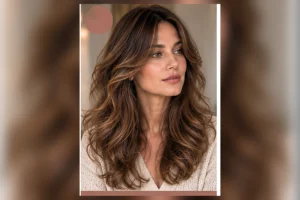
A U-shaped perimeter creates a rounded outline through the back rather than keeping every strand at exactly the same length.
On thick wavy hair, the curved shape allows the sides and center to flow into one another more naturally. Long layers can be added through the interior to reduce heaviness while preserving the soft U shape at the bottom.
This is a great option if maintaining length is one of your priorities.

9. V-Cut With Long Waves
A V-cut creates a more pointed shape through the back, with the center remaining longest while the sides gradually become shorter.
This can give extra-long thick hair more direction and prevent the bottom from appearing like one large block. Long waves emphasize the V shape naturally, especially when soft layers are added through the lower half.
The contrast can be subtle or dramatic depending on how much length difference you want.

10. Wavy Bob With Internal Layers
A wavy bob can look beautifully full on thick hair, but some internal weight removal often makes the difference between a controlled shape and an overly bulky one.
The exterior can remain relatively strong while hidden layers underneath allow the waves to settle more naturally. This preserves the visual fullness associated with a bob while making the haircut easier to move and style.
11. Wavy French Bob
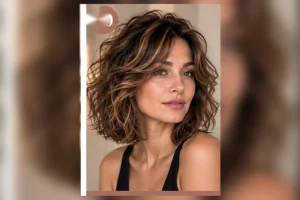
A French bob usually sits around the jaw or slightly lower and can look especially striking with natural waves.
For very thick hair, the shape should be carefully customized so the sides do not expand too much after drying. Soft internal layering and a slightly textured perimeter can give the waves space while retaining the compact, chic outline of the cut.

12. Angled Wavy Bob
An angled bob is shorter through the back and becomes gradually longer toward the front. This structure can remove heaviness behind the head while leaving enough length around the face for softer waves.
The angle does not have to be dramatic. Even a subtle graduation can make dense hair feel lighter and give the haircut a more intentional shape.

13. Blunt Lob With Soft Internal Layers
If you love a strong perimeter but your thick waves become too heavy in a completely blunt cut, combine the two ideas.
The outside remains relatively solid and polished while gentle internal layering removes some weight underneath. This gives you the visual density of a blunt lob without forcing every strand to occupy the same level.
The natural waves then soften the clean perimeter.

14. Shoulder-Length Wavy Shag
A shoulder-length shag provides enough room for multiple layer lengths while still taking a significant amount of weight away from long hair.
Shorter crown pieces can increase movement while longer layers around the shoulders keep the cut balanced. It works especially well for naturally tousled waves because the texture creates separation without requiring every section to be heat-styled.

15. Wavy Wolf Cut
The wolf cut creates more contrast between shorter crown layers and longer pieces around the sides and back.
Thick waves can support this structure particularly well because the natural density prevents the layered sections from looking flat. The key is deciding how dramatic you want the difference between the upper and lower lengths to be.
A softer wolf cut can feel wearable and flowing, while stronger disconnection produces a bolder look.

16. Bixie for Thick Wavy Hair
A bixie combines elements of a bob and pixie, leaving more length than a traditional pixie while still removing much of the overall weight.
Thick wavy texture can give this haircut excellent natural volume, but the shape must be controlled around the sides and back. Keeping some longer movement through the top allows the waves to become a feature rather than simply creating unwanted width.

17. Curtain Bangs With Long Wavy Layers
Curtain bangs blend naturally into thick wavy hair because their longer outer pieces can become part of the surrounding layers.
The center opens around the forehead while the sides gradually connect with the cheekbone- or jaw-length sections. On thick hair, the amount of hair used for the fringe matters. Too much can make the bangs feel overly dense, so the section should be customized to your natural density.
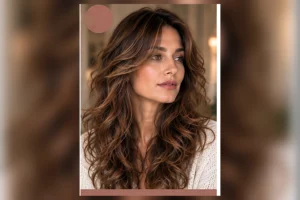
18. Bottleneck Bangs With Waves
Bottleneck bangs begin shorter through the center and widen into longer pieces toward the cheekbones.
That curved progression works nicely with layered waves because the fringe does not stop abruptly at the sides. The longer sections become part of the overall face framing.
This is a good alternative when you want more definition than curtain bangs but less heaviness than a full blunt fringe.

19. Side-Swept Fringe With Layers
A long side-swept fringe introduces diagonal movement through the front while blending naturally into the surrounding waves.
Because the fringe stays relatively long, it is easier to manage on thick hair than very short bangs. You can wear it across the forehead, tuck it behind the ear, or let it become part of the main layers as it grows.

20. Long Face-Framing Layers
You do not need layers throughout the entire haircut to create movement. Long face-framing pieces can update thick wavy hair while leaving most of the back relatively full.
Starting the shortest pieces somewhere around the cheekbones, jaw, or collarbone lets you control how dramatic the effect becomes.
These sections can also reduce heaviness around the front without changing your overall length significantly.

21. Feathered Wavy Layers
Feathered layers encourage the ends to move away from the face and from one another rather than sitting in one dense mass.
On thick waves, that movement can make the overall silhouette feel much lighter. The layers do not need to be extremely short; medium-to-long feathered sections often provide enough movement without creating excessive volume at the crown.
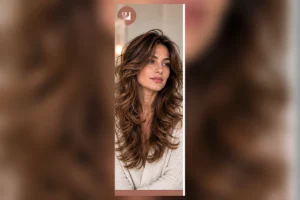
22. Soft Choppy Lob
A choppy lob introduces more obvious texture through the ends and lower layers, creating an intentionally relaxed finish.
On thick hair, the choppiness should still be balanced. Over-thinning the ends may make the wave pattern unpredictable, while controlled texture helps the natural bends separate and move.
This cut works particularly well if you prefer tousled styling rather than a perfectly smooth blowout.

23. Deep Side-Part Layered Cut
Sometimes you can change the entire shape of thick wavy hair without dramatically changing the length.
A deep side part creates instant asymmetry and extra root lift on one side. Combined with long, soft layers, it lets the waves cascade in a more directional way rather than dividing evenly around the head.
It is especially effective on medium and long hair.

24. Low-Maintenance Air-Dry Layers
If you rarely use a blow-dryer or curling iron, your haircut should be designed around the way your waves actually dry.
Longer, strategic layers can reduce heaviness while still allowing the natural wave pattern to settle into place without extensive styling. Avoid choosing a reference photo that only works after a polished blowout if you normally air-dry every day.
Current wavy-hair guidance also stresses that cuts should follow the natural pattern rather than treating wavy hair exactly like straight hair.

25. Extra-Long Seamless Layers
Extra-long hair can become extremely heavy when it is thick and wavy, but you do not have to sacrifice the length to improve the shape.
Seamless layers can remove excess weight throughout the mid-lengths while keeping the longest sections intact. The transitions should remain soft enough that the haircut still looks flowing rather than heavily tiered.
This is ideal if length matters more to you than dramatic layering.

Why Thick Wavy Hair Needs Strategic Layering
Thick hair and high-density hair are related concepts, but they are not exactly the same thing. Hair “thickness” can refer to the diameter of individual strands, while density describes how many strands are present in a section of the scalp. Both can influence how a haircut behaves.
For dense wavy hair, removing weight in carefully chosen areas is usually more useful than simply making the entire haircut shorter. Too much indiscriminate thinning can leave the ends wispy while the upper hair still feels bulky.
The goal is balance: enough weight should remain to control the wave pattern, while enough bulk is removed to let the hair move.
Best Thick Wavy Haircuts by Length
Long thick wavy hair usually works well with blended layers, butterfly cuts, U-cuts, V-cuts, shags, and seamless long layers. These shapes preserve the length while redistributing weight.
At medium length, lobs, shoulder-length shags, collarbone layers, rounded layers, and invisible layers provide a useful balance between movement and manageability.
Short thick wavy hair can work beautifully in textured bobs, French bobs, angled bobs, bixies, and even pixies, but the shorter the haircut becomes, the more important the shape and weight distribution become. Current thick-hair guidance similarly emphasizes strategic weight removal rather than simply cutting everything shorter.
What to Ask Your Stylist
Instead of simply asking for “layers,” explain what your hair actually does. Tell your stylist whether your waves expand at the sides, whether the ends feel heavy, how much shrinkage you notice after drying, and whether you prefer more or less volume through the crown.
If you want to preserve fullness, ask for strategic or internal weight removal rather than aggressive thinning throughout the entire haircut. Bring photos showing hair with density and wave pattern reasonably similar to yours.
It is also important to explain whether you normally air-dry, diffuse, blow-dry, or straighten your hair. A haircut designed for natural air-dried waves may need a different structure from one intended for frequent smooth blowouts.
How to Style Thick Wavy Hair
The easiest styling routine is usually one that supports your natural wave rather than trying to rebuild it from scratch.
Apply a lightweight leave-in or styling cream to damp hair, distribute it through the mid-lengths and ends, and gently scrunch the waves upward. You can then air-dry or use a diffuser if you want faster drying or more definition.
Avoid loading the roots with heavy creams or oils because thick hair already carries plenty of weight. If your ends are dry, concentrate richer products there instead.
If you regularly use heat styling, follow these dermatologist-reviewed healthy hair care tips. The American Academy of Dermatology recommends limiting excessive heat and using low or medium heat settings to help reduce damage.
Common Mistakes With Thick Wavy Haircuts
One common mistake is removing too much hair indiscriminately. Thick hair does need weight control, but excessive thinning can make the lower sections look stringy while causing shorter pieces to expand unpredictably.
Another problem is cutting too many short layers around the crown. If your wave pattern naturally creates volume, very short layers can produce more height and width than you intended.
Ignoring the dry pattern is another issue. Wavy hair can sit differently once it loses moisture, which is why current stylist guidance recommends considering the natural wave rather than cutting it as though it were completely straight.
How to Maintain Thick Wavy Hair
The best trim schedule depends on the haircut. A bob or bixie will usually show changes in shape sooner than long blended layers, while shags and wolf cuts can often tolerate a slightly more grown-out appearance.
Instead of following one exact number of weeks, watch how the shape behaves. When the ends become overly heavy, your waves stop forming as cleanly, or the crown loses its intended balance, it may be time for a reshape.
Conditioning also matters because thick, textured hair can become dry through the lengths. The American Academy of Dermatology recommends conditioning after washing and choosing care products based on your hair type.
Frequently Asked Questions
Should Thick Wavy Hair Be Layered?
Layering can be extremely useful because it removes some of the excess weight and helps the wave pattern move. The important part is where those layers are placed. Too many short layers can create unwanted expansion, while strategic longer or internal layers can reduce heaviness without sacrificing fullness.
What Haircut Is Best for Long Thick Wavy Hair?
Long blended layers, butterfly layers, U-cuts, V-cuts, long shags, and seamless internal layers are all strong options. The ideal choice depends on how much length you want to keep and how much volume you want through the crown.
What Haircut Is Best for Medium Thick Wavy Hair?
Lobs, collarbone cuts, shoulder-length layers, shags, rounded layers, and invisible layers all work well because they provide enough length for waves to form while reducing some of the overall weight.
Can Thick Wavy Hair Be Cut Short?
Yes. Bobs, French bobs, angled bobs, bixies, and pixies can all work, but the weight needs to be managed carefully. Very thick waves can expand significantly when shortened, so your stylist should account for the dry shape.
Is a Shag Good for Thick Wavy Hair?
Yes. Thick wavy hair naturally supports the movement and layer separation associated with a shag. Strategic crown and interior layers can remove bulk while allowing the texture to remain visible.
Are Curtain Bangs Good for Thick Wavy Hair?
They can be. The main consideration is density. If too much hair is included in the fringe, the bangs may feel heavy. A customized, slightly lighter curtain section often blends more naturally with wavy layers.
How Do You Make Thick Wavy Hair Less Bulky?
Strategic internal layers, longer blended layers, careful weight removal, and a length that allows the waves to fall naturally can all help. Simply thinning the ends aggressively is not always the best solution.
What Is the Lowest-Maintenance Haircut for Thick Wavy Hair?
Long blended layers, air-dry layers, U-shaped cuts, and collarbone-length cuts can all be relatively low maintenance because they work with the natural texture and grow out gradually.
Should Thick Wavy Hair Be Cut Wet or Dry?
Both techniques can work, but the final natural pattern should be considered because wavy hair can sit differently after drying. The important thing is that your stylist understands how your waves behave in their normal state.
Final Thoughts
The best thick wavy haircuts are designed around weight distribution, not around fighting your natural texture. Thick waves already have movement and volume; a good haircut simply gives that texture a better shape.
Long layers can preserve length while reducing heaviness, bobs and lobs can create structure, shags and wolf cuts can amplify texture, and internal layers can lighten the hair without making the surface look excessively layered.
Your density, strand thickness, wave pattern, styling routine, and preferred amount of volume should all influence the final cut. When those factors are considered together, thick wavy hair can feel much easier to manage while still keeping the fullness that makes it distinctive.