
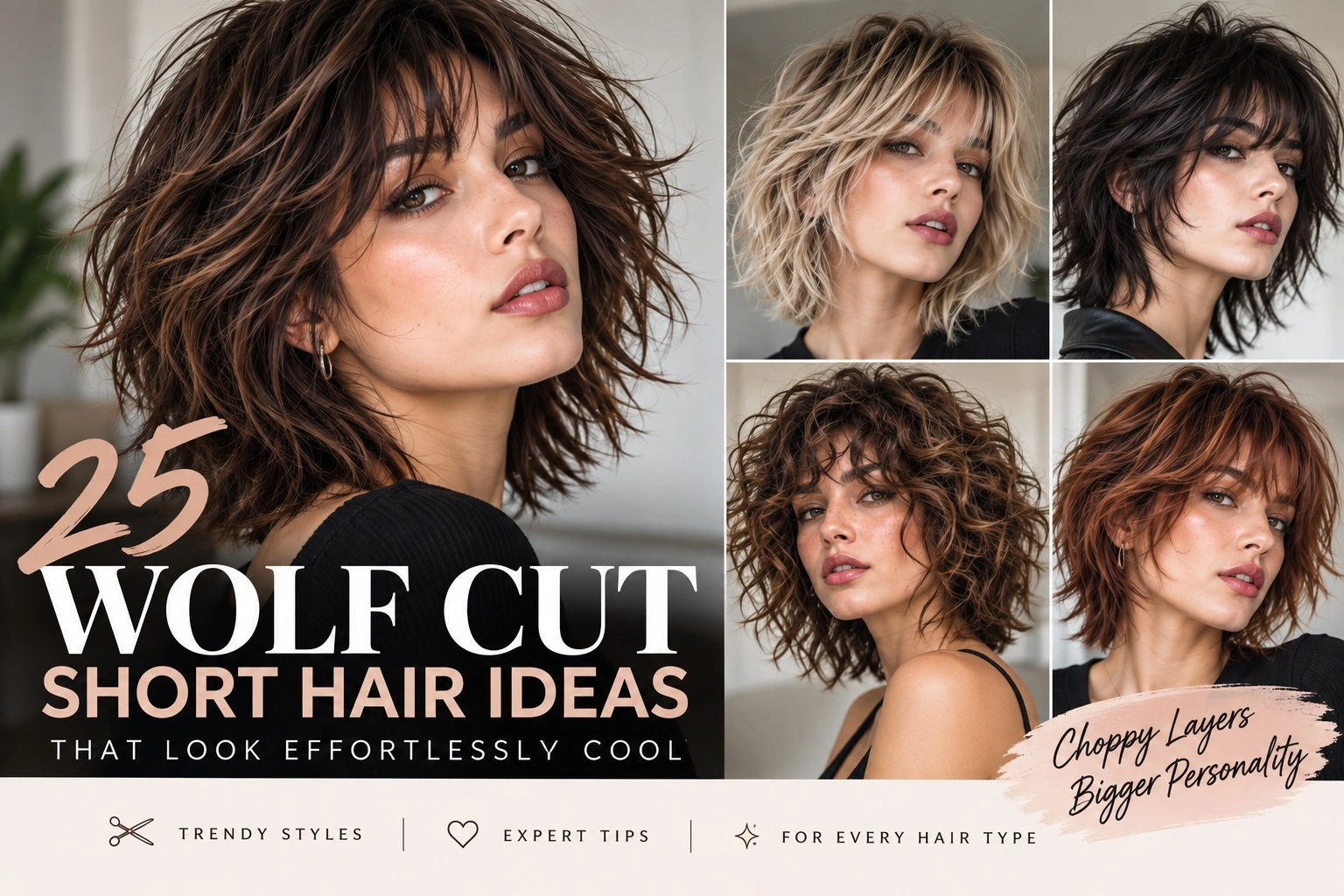
If you are searching for wolf cut short hair ideas, you are probably looking for something with more personality than a traditional bob or pixie. The short wolf cut combines choppy layers, crown volume, face-framing pieces, and a slightly undone finish to create a haircut that feels modern, edgy, and surprisingly wearable. Depending on how the layers are shaped, this haircut can look soft and feathered, curly and voluminous, sleek and piecey, or intentionally messy.
One of the biggest advantages of a short wolf cut is how easily it can be customized. Your natural texture, hair density, preferred fringe, face shape, and everyday styling routine can all influence the final result. Below, you will find 25 wolf cut short hair ideas along with practical advice for choosing, styling, and maintaining the right version for you.
What Is a Short Wolf Cut?
A short wolf cut combines elements of a shag and a mullet, but modern versions are usually much softer and easier to wear than those descriptions might suggest. The crown typically contains shorter layers that create lift and movement, while slightly longer pieces are left around the sides and back. Face-framing sections or bangs are often added to make the shape feel more intentional. On short hair, the contrast between the upper layers and the lower sections becomes more noticeable, which is what gives this haircut its characteristic texture. Depending on how dramatic the layers are, the finished look can range from feminine and softly feathered to bold, messy, and highly textured.
If you love textured layers but want something a little softer, explore our shag hairstyles for women for more layered haircut inspiration.
1. Soft Short Wolf Cut With Curtain Bangs
A soft short wolf cut with curtain bangs is a great introduction to this hairstyle if you want movement without extremely disconnected layers. The crown is layered enough to create natural lift, while slightly longer pieces remain around the jaw and neck to keep the haircut balanced.
Curtain bangs soften the front and blend naturally into the surrounding face-framing layers. They can be worn with a center part or slightly off-center, making this variation easy to personalize. Loose waves can further enhance the shape and give the haircut an effortless finish.
2. Cropped Wolf Cut Bob
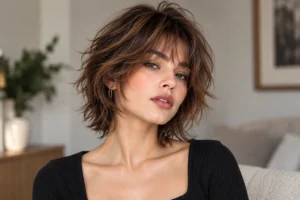
The cropped wolf cut bob combines the compact length of a bob with the layered texture of a wolf cut. Instead of keeping one solid line around the perimeter, the haircut uses shorter crown layers and piecey ends to create a softer, more relaxed silhouette. This version is ideal if you want to cut your hair shorter while still keeping enough length around the face for styling flexibility. A small amount of texture cream through the ends can help define the layers without making the hair feel stiff or overly styled.
3. Short Wolf Cut With Loose Waves
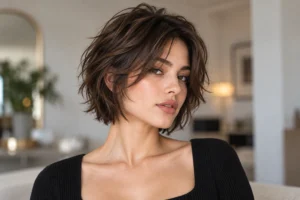
Natural waves work especially well with wolf cut short hair because they make the different layer lengths more visible. Shorter layers around the crown create lift, while longer sections through the sides add movement and prevent the style from looking too rounded. Instead of creating perfectly uniform curls, allow different sections to bend in slightly different directions. That irregular movement helps maintain the effortless, relaxed character that makes this haircut so appealing.
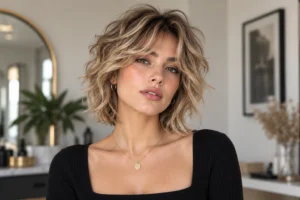
4. Curly Short Wolf Cut
A curly short wolf cut can create beautiful volume and dimension because the layers allow individual curls to form at different heights. Strategic layering can remove excess weight while encouraging more lift around the crown and maintaining longer curls through the sides and back. Because curly hair often becomes shorter once it dries, your stylist should consider shrinkage before choosing the final layer lengths. When cut properly, this style can make natural curls feel lighter, more defined, and easier to shape.
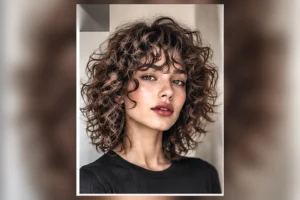
5. Short Wolf Cut for Fine Hair
Fine hair can work beautifully with a short wolf cut when the layering is carefully controlled. Removing too much density may make the ends look thin, so the strongest layering is usually better concentrated around the crown and front while preserving more weight through the perimeter.A lightweight volumizing mousse or root-lifting spray can help enhance the crown without weighing the hair down. The goal is to create movement and lift while still keeping the overall haircut looking full.
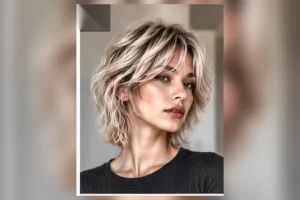
6. Short Wolf Cut for Thick Hair
Thick hair provides plenty of density for creating a dramatic wolf-cut shape. Interior layers can remove unwanted bulk while shorter surface layers encourage movement and give the haircut more definition. The key is avoiding excessive thinning in areas where structure is still needed. Rather than simply removing as much hair as possible, ask your stylist to focus on strategic weight removal so the haircut feels lighter without losing its naturally full appearance.
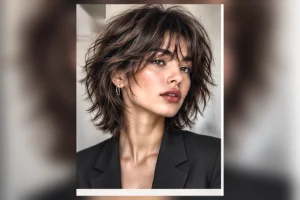
7. Shaggy Pixie Wolf Cut
A shaggy pixie wolf cut is one of the shortest ways to wear this trend. The sides and back remain relatively cropped, while additional length around the crown and top creates enough movement for the characteristic wolf-cut texture. The longer upper sections can be styled forward, lifted, swept sideways, or deliberately tousled. Piecey bangs can add even more personality, making this version especially appealing if you already have a pixie and want to grow it into something softer and more layered.
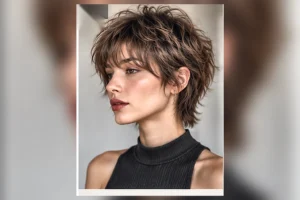
8. Short Wolf Cut With Wispy Bangs
Wispy bangs add softness to a short wolf cut without covering too much of the forehead. Their lightweight appearance blends naturally into shorter face-framing layers and helps create a smooth transition between the fringe and the rest of the haircut. This variation is particularly useful if you want visible texture without committing to a heavy fringe. A small amount of lightweight styling cream can help keep the bangs separated and airy throughout the day.
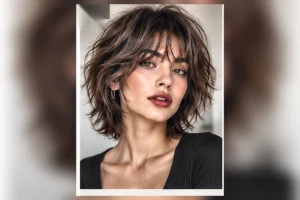
9. Short Wolf Cut With Blunt Bangs
Blunt bangs create a striking contrast with the uneven texture of a wolf cut. The fringe provides a strong horizontal line across the forehead while the sides and back remain soft, choppy, and layered. This contrast can make the haircut feel bold and editorial. However, blunt bangs generally need more frequent maintenance than curtain or wispy bangs, and they may require some daily styling depending on your natural hair growth pattern.
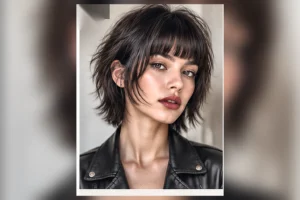
10. Wavy Wolf Cut Bob
A wavy wolf cut bob is a great option if you like the practicality of a bob but want something less structured. The overall length usually sits around the jaw or slightly below it, while layers break up the traditional bob shape and create more movement. Soft waves highlight the different layer lengths and make the haircut feel airy rather than heavy. Styling a few sections in alternating directions can help prevent the waves from looking too uniform or overly polished.
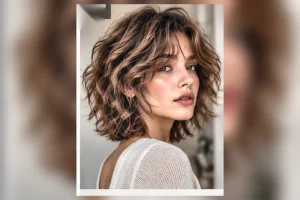
11. Short Wolf Cut With Bottleneck Bangs
Bottleneck bangs start slightly shorter through the center and gradually become longer toward the cheekbones. Their curved shape blends naturally into the face-framing layers of a short wolf haircut, making them one of the easiest fringes to combine with this style. They provide more structure than fully grown-out curtain bangs without creating the heavier appearance of a blunt fringe. This look is particularly flattering when the hair is worn with a center or slightly off-center part.
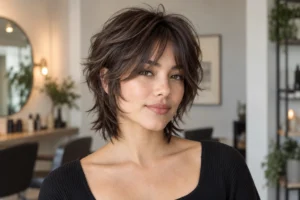
12. Razor-Textured Short Wolf Cut
A razor-textured short wolf cut focuses on lightness, separation, and movement. When suitable for the hair type, razor cutting can soften the ends and create a feathered finish that makes the haircut appear naturally undone. However, razor cutting is not ideal for every texture or hair condition. A professional stylist can determine whether a razor, scissors, or a combination of techniques will produce the cleanest and healthiest result.
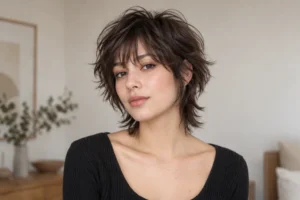
13. Short Wolf Cut With Side-Swept Bangs
Side-swept bangs give a short wolf cut a softer and slightly asymmetrical appearance. Instead of dividing through the center, the fringe moves diagonally across the forehead and blends into the surrounding layers. This creates visual movement toward one side of the face and can work particularly well if you prefer a side part. It is also a useful option when growing out shorter bangs because the extra length can gradually become part of the overall haircut.
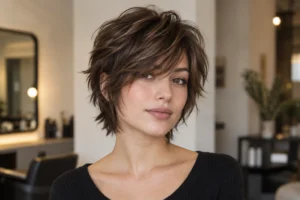
14. Airy Korean-Inspired Short Wolf Cut
A Korean-inspired short wolf cut usually features softer layering and a more polished finish than heavily choppy versions. The crown still has natural volume, but the face-framing pieces tend to be lighter and more blended around the cheekbones and jaw. This style is ideal if you love the general shape of a wolf cut but want something subtle enough for everyday wear. Light styling and airy ends help keep the haircut youthful and modern without making it look overly dramatic.

15. Jaw-Length Wolf Cut
A jaw-length wolf cut keeps the overall haircut compact while still leaving enough length to show the layered structure. Shorter crown layers create lift, while the longest pieces sit close to the jawline. This is a useful length if you want something noticeably shorter but still want the ability to tuck your hair behind your ears. It works with straight, lightly wavy, or tousled styling and can be customized with or without bangs.
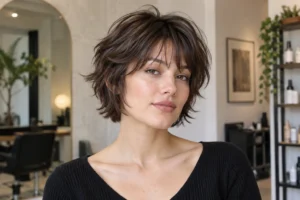
16. Short Wolf Cut With Baby Bangs
Baby bangs can transform a short wolf cut into a much more dramatic statement hairstyle. The fringe sits well above the eyebrows, while the remaining hair stays choppy, layered, and textured. Because both the short fringe and wolf-cut layers are strong design elements, the final result feels intentionally bold. The exact length of baby bangs makes a big difference, so it is worth discussing the look carefully with your stylist before cutting.

17. Rounded Short Wolf Cut
Not every short wolf cut has to look sharp or heavily disconnected. A rounded version uses softer transitions between the layers to create a fuller, more blended silhouette. The crown still contains shorter sections for movement, but the layers gradually flow into the sides and back. This makes the haircut a good option if you want the texture and lift of a wolf cut while maintaining a more polished overall shape.

18. Voluminous Short Wolf Cut
If extra volume is your main goal, a short wolf cut with strong crown layering can be an excellent choice. The shorter upper layers naturally lift away from the scalp while longer side sections maintain balance. A lightweight volumizing mousse or root spray can further enhance the effect. When blow-drying, directing the crown hair upward instead of flat against the head can create even more height without requiring heavy styling products.
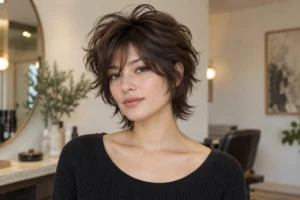
19. Short Wolf Cut Without Bangs
Bangs are common with wolf cuts, but they are not essential. A short wolf cut without bangs can use longer face-framing pieces around the front to create movement while leaving the forehead open. A center part creates a balanced look, while an off-center or side part can add additional volume. This version also requires less fringe maintenance, making it practical for anyone who loves layered hair but does not want regular bang trims.
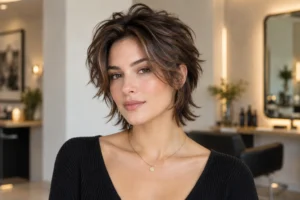
20. Short Wolf Cut With Flipped Ends
Flipped ends add a playful retro touch to wolf cut short hair. The crown remains layered and textured, while selected pieces near the sides and bottom are styled outward. The flips can be subtle for a modern look or more exaggerated for a stronger vintage-inspired finish. A round brush during blow-drying is often enough to create this effect without requiring complicated styling tools.
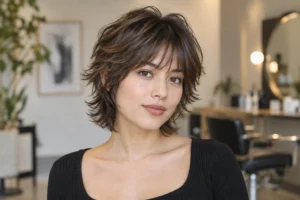
21. Tousled Short Wolf Cut
A tousled short wolf cut is designed to look slightly imperfect in the best possible way. Choppy layers create natural separation so the haircut does not depend on every strand sitting in exactly the right place. Using your fingers rather than a brush can help preserve this relaxed appearance. A light texture spray can add definition and movement while keeping the hair flexible and touchable.

22. Short Wolf Cut With an Undercut
Combining a short wolf cut with an undercut creates a more dramatic and modern result. Removing some hair underneath can reduce bulk while making the longer textured sections above appear even more defined. The undercut can remain hidden when the hair is worn down or become more visible depending on how the style is arranged. Because the closely cropped section grows out quickly, this version usually requires more regular maintenance than a traditional short wolf cut.
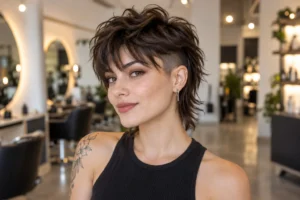
23. Feathered Short Wolf Cut
A feathered short wolf cut offers a softer interpretation of the trend. Instead of heavily separated pieces, the layers sweep naturally away from the face and blend smoothly through the sides. This gives the haircut plenty of movement without making it look extremely choppy. Styling with a round brush can help emphasize the feathered direction and create a finish that feels slightly retro while still looking current.

24. Low-Maintenance Air-Dry Wolf Cut
A short wolf cut can be surprisingly low maintenance when it is designed around your natural texture. Instead of choosing a haircut that depends on curling or straightening every morning, ask your stylist to consider how your hair behaves when allowed to air-dry. Strategically placed layers can encourage natural bends, waves, or curls to form with minimal effort. The goal is to create a haircut that still looks intentional even when you use very little heat or styling product.

25. Edgy Piecey Short Wolf Cut
An edgy piecey wolf cut is one of the boldest ways to wear the style. Heavily separated layers create strong texture through the crown, while jagged sections around the face and neck make the wolf-cut shape more noticeable. A small amount of styling paste or lightweight wax can help define selected pieces. Use the product sparingly, especially on fine hair, because too much can flatten the crown and reduce the volume that makes this haircut stand out.
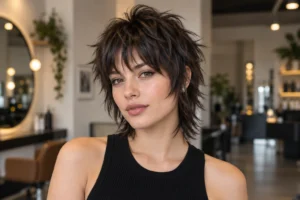
How to Choose a Short Wolf Cut for Your Hair Type
Your natural hair texture plays an important role in determining how a short wolf cut will look and how much daily styling it may require. On straight hair, the different layer lengths are usually very visible, so soft texturing can help prevent the haircut from appearing too blocky. Fine straight hair should generally keep some weight through the ends, while thicker straight hair may benefit from additional interior layering.
Wavy hair naturally complements wolf-cut layers because the bends and movement make the haircut look textured without requiring much effort. Curly hair can also work beautifully, but the stylist needs to account for curl pattern, density, and shrinkage before deciding where the shortest layers should sit. Fine hair usually benefits from strategic crown layering rather than excessive thinning, while thick hair can often support more internal weight removal.
Short Wolf Cuts and Face Shapes
Face shape can be useful when deciding where to position volume and face-framing layers, but it should not be treated as a strict rule. For a round face, extra crown height combined with slightly longer sections around the sides can create more vertical movement. Curtain or wispy bangs can also add diagonal lines around the face.
Oval faces can usually experiment with most short wolf cut variations, from pixie-length styles to jaw-length versions and different types of fringe. Square faces may benefit from softer waves and curved face-framing pieces, while heart-shaped faces can look balanced with longer fringe sections around the cheekbones and jaw. For longer or oblong faces, keeping some fullness around the sides rather than placing all the volume at the crown can help create a more balanced silhouette.
What to Ask Your Stylist for a Short Wolf Cut
Showing your stylist a reference image is helpful, but explaining exactly what you like about the haircut is even more important. Before cutting, discuss how short you want the overall length, where you would like the crown layers to begin, how much volume you want at the top, and whether you prefer blended or more disconnected layers.
You should also talk about your preferred fringe, whether that means curtain bangs, wispy bangs, blunt bangs, side-swept bangs, or no bangs at all. Let your stylist know whether you normally air-dry your hair or use heat tools, how much daily styling you are comfortable with, and how much length you would like to keep around the nape. Whenever possible, choose reference photos featuring hair texture and density similar to your own because the same wolf cut can look very different on fine straight hair compared with dense curly hair.
How to Style Wolf Cut Short Hair
The best styling technique depends on your natural texture, but short wolf cuts generally look their best when movement is enhanced rather than removed. For straight hair, a lightweight volumizing product can be applied before blow-drying, with extra attention paid to lifting the crown and creating slight bends through selected layers.
Wavy hair can often be styled by scrunching mousse or texture cream into damp hair and either air-drying or using a diffuser. Curly hair usually responds well to curl cream or gel applied while damp, followed by gentle diffusing to maintain definition. Very short wolf cuts can also benefit from a tiny amount of styling paste to separate individual sections. Heavy products should generally be avoided at the roots because they can reduce crown volume.
How to Maintain a Short Wolf Cut
Short hair tends to show changes in shape faster than longer hair, so your trim schedule will depend on how quickly your hair grows and how structured you want the haircut to remain. Bangs often require attention before the rest of the style, while pixie-length versions and undercuts may also need more regular reshaping.
Between appointments, focus on keeping the ends conditioned and limiting unnecessary heat exposure. The good news is that wolf cuts are designed around texture, so the haircut does not need every layer to remain perfectly smooth or freshly trimmed at all times. A slightly grown-out finish can often work naturally with this style.
Is a Short Wolf Cut High Maintenance?
A short wolf cut can be either low or high maintenance depending on the version you choose. A haircut designed around your natural wave or curl pattern may require very little daily styling, while polished bangs, flipped ends, or carefully shaped crown volume may need more attention.
Shorter versions generally require more frequent trims because changes in length become noticeable sooner. The easiest way to keep the haircut manageable is to choose a version that works with your natural hair texture rather than requiring you to completely change how your hair behaves every morning.
Frequently Asked Questions
Does a Wolf Cut Work on Really Short Hair?
Yes, a wolf cut can be adapted to pixie, ear-length, jaw-length, and bob-length hair. The most important features are visible crown layering, texture, and enough variation in length to create the signature wolf-cut shape.
Is a Short Wolf Cut Good for Fine Hair?
A short wolf cut can work well on fine hair when the layers are placed strategically. Keeping more density through the lower sections while adding controlled lift around the crown can prevent the haircut from appearing overly thin.
Can Curly Hair Have a Short Wolf Cut?
Curly hair can look especially good in a short wolf cut because the different layers allow curls to form at multiple heights. Your stylist should consider shrinkage and curl pattern carefully so the final shape remains balanced after the hair dries.
Can You Have a Short Wolf Cut Without Bangs?
Yes. Bangs are optional, and longer face-framing pieces can create the same layered effect around the front while keeping the forehead open. This can also make the haircut easier to maintain.
What Is the Difference Between a Short Wolf Cut and a Shag?
Both haircuts rely heavily on layering and texture, but a wolf cut usually places greater emphasis on crown volume and a more noticeable difference between the shorter upper layers and the longer sections underneath. A shag can have a softer and more evenly distributed layered shape.
What Is the Difference Between a Wolf Cut and a Mullet?
A traditional mullet normally creates a stronger distinction between short hair at the front or sides and longer hair at the back. A modern wolf cut usually connects these areas with more blended, shaggy layers and face-framing texture.
Do Wolf Cuts Work on Straight Hair?
Yes, straight hair can show the structure of a wolf cut very clearly. A small amount of texture spray or lightweight styling cream can help add separation and create a more relaxed finish if desired.
How Do You Make a Short Wolf Cut Look More Voluminous?
Crown layering, lightweight root-lifting products, and directional blow-drying can all help increase volume. Avoiding heavy products at the scalp is also important because they can flatten the shorter upper layers.
Are Wolf Cuts Difficult to Grow Out?
Because a wolf cut contains many different layer lengths, some sections may reach awkward stages during the grow-out process. Occasional reshaping can help gradually blend those layers into a longer shag, bob, or layered haircut.
Final Thoughts
A wolf cut for short hair can be customized far more than its edgy reputation suggests. You can wear it straight, wavy, or curly, keep the layers soft and wearable, or make them more disconnected for a bolder finish. Bangs are optional, and everything from curtain fringe to baby bangs can completely change the personality of the haircut.
The best wolf cut short hair style is the one designed around your natural texture, density, preferred length, and everyday routine. Whether you choose a cropped wolf bob, curly short wolf cut, shaggy pixie version, feathered style, or a short wolf cut with curtain bangs, thoughtful layering can give your hair more movement, texture, and volume while still feeling completely personal.