

Shag hairstyles are all about movement, texture, and layers that make the hair look effortlessly styled. Instead of relying on one blunt length, a shag uses shorter pieces around the crown and face with longer layers through the rest of the hair. The result can be soft and feminine, messy and relaxed, or bold and edgy depending on how the cut is customized.
One of the best things about a modern shag haircut is how many different versions you can choose from. Short, medium, and long hair can all work with shaggy layers, while bangs can completely change the personality of the cut. Straight hair can gain movement, waves can look more defined, curls can feel lighter, and thick hair can lose unwanted bulk. If you are thinking about changing your haircut, these shag hairstyles can help you find a version that suits your hair texture, preferred length, and personal style.
What Is a Shag Hairstyle?
A shag is a layered haircut designed to create texture, movement, and a slightly undone finish. It usually includes shorter layers near the crown, face-framing pieces, textured ends, and sometimes bangs.
The classic shag became known for its relaxed, rock-inspired appearance, but today’s versions can look much softer and more polished. You can choose subtle blended layers for an everyday haircut or more dramatic disconnected layers when you want an edgier shape.
The key is customization. The amount of layering should depend on your hair density, natural texture, desired length, and how much styling you want to do each day.
1. Soft Modern Shag With Curtain Bangs
A soft modern shag is an easy introduction to this layered haircut if you do not want anything too dramatic. Gentle layers create movement around the crown and mid-lengths while keeping enough fullness through the ends. Curtain bangs work especially well with this style because they blend naturally into the face-framing layers. Wear the cut with loose waves for an effortless finish or blow-dry it smoothly when you want something more polished.

2. Classic 70s-Inspired Shag
The 70s-inspired shag embraces everything that originally made this haircut distinctive: plenty of crown volume, feathered layers, textured ends, and a noticeable fringe. This version looks especially striking when the layers are styled away from the face. A round brush can help create the characteristic flicked shape, while a light texturizing product keeps the style relaxed rather than overly perfect. It is a great choice when you want a retro haircut that still feels wearable today.
3. Short Shag Bob
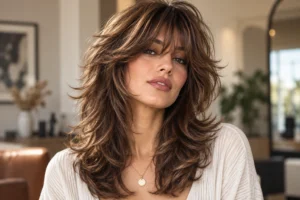
Combine the compact length of a bob with the movement of shaggy layers for a short haircut that has plenty of personality. Rather than creating the clean, solid outline associated with a classic bob, the shag bob uses broken-up layers and textured ends. This makes the shape feel softer and less structured. A short shag bob can look especially good with loose waves, a wispy fringe, or a slightly tousled finish.

4. Medium Shag With Loose Waves
Medium-length hair gives you plenty of space for layering without requiring a major loss of length. In this version, shorter layers around the crown gradually blend into shoulder-length or collarbone-length pieces. Loose waves help show off the different levels of the cut and give the hair an airy, natural appearance. This is one of the most versatile shag hairstyles if you want noticeable movement while still being able to tie your hair back.

5. Long Shag With Face-Framing Layers
You do not need to cut your hair short to enjoy a shag. A long shag keeps most of the overall length while introducing layers through the upper and middle sections. Face-framing pieces can start around the cheekbones, jaw, or lower depending on the effect you prefer. The layers prevent long hair from appearing like one heavy shape and can make natural movement much more visible. It is an excellent option for anyone who loves long hair but wants a noticeable change.
6. Curly Shag With Curly Bangs
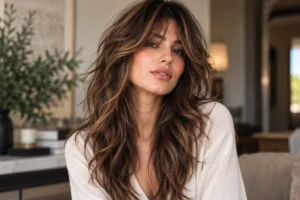
Naturally curly hair can look beautiful in a shag because the different layer lengths allow individual curls to form at different heights. Instead of leaving all the volume toward the bottom, crown and face-framing layers can create a more balanced silhouette. Soft curly bangs finish the look and help connect the front of the haircut with the rest of the layers. Because curls can spring up after cutting, discuss your natural shrinkage and usual styling routine with your stylist before choosing the fringe length.

7. Shag Haircut for Fine Hair
Fine hair needs thoughtful layering. Too many aggressive layers may remove more density than you want, so a softer shag is often a better approach. Concentrating shorter layers around the crown can create lift while maintaining a fuller-looking perimeter. Light face-framing pieces can provide movement without making the lower section appear overly thin. A lightweight volumizing mousse or root-lifting product can help emphasize the shape without weighing the hair down.

8. Shag Haircut for Thick Hair
Thick hair can benefit from the weight-removing effect of a layered shag. Instead of allowing the hair to form one heavy block, carefully placed interior and surface layers encourage movement throughout the length. The ends can also be softened so that the haircut feels lighter. The exact amount of layering is important. Ask your stylist to remove enough bulk for movement while preserving the fullness you like.

9. Straight Shag With Wispy Bangs
Shag hairstyles do not require naturally wavy hair. Straight hair can make the structure of the layers particularly noticeable. A wispy fringe keeps the front soft while choppy or feathered pieces create dimension through the lengths. The haircut can be worn smooth for a cleaner finish or styled with a small amount of texture spray for more separation. This version works well if you want movement without relying on curls.
10. Collarbone-Length Shag
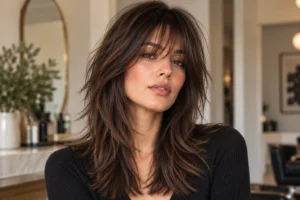
A collarbone-length shag falls between a short and long haircut, making it a practical choice when you are not ready for a dramatic chop. Layers around the cheekbones and jaw gradually blend into longer pieces that skim the collarbone. This creates plenty of movement while preserving enough length for ponytails and casual updos. The length also works well with straight, wavy, and gently curly textures.

11. Shaggy Lob
The shaggy lob combines a long bob silhouette with softer, more relaxed layering. Instead of keeping the perimeter completely blunt, textured layers break up the shape and give the hair more movement. Add subtle face-framing pieces if you want the cut to feel lighter around the front. It is a good compromise for anyone who likes the practicality of a lob but wants something less structured.
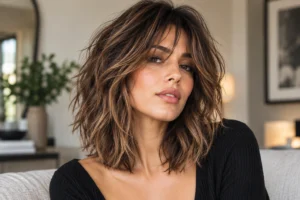
12. Wolf-Shag Hybrid
A wolf-shag hybrid takes the layered crown of a shag and combines it with a slightly more dramatic contrast between the upper and lower sections. The top usually has plenty of texture and volume, while longer pieces remain toward the back. The effect can range from subtle to bold depending on how disconnected you want the layers to appear. Choose this haircut when you prefer an edgier interpretation of traditional shag hairstyles.

13. Shag With Bottleneck Bangs
Bottleneck bangs start narrower near the forehead and gradually become longer toward the cheekbones. That curved shape makes them easy to blend into a shag haircut. Pair them with medium or long layers for a soft face-framing effect. The result feels more relaxed than a heavy straight-across fringe and can be styled with a center or slightly off-center part. A small round brush can help create the outward bend around the sides.

14. Razor-Cut Shag
A razor-cut shag focuses on soft, feathered texture rather than strong blunt lines. The technique can give the ends a lightweight, airy finish and make the different layers flow into one another. This can look especially attractive on straight or naturally wavy hair. Razor cutting is not the right approach for every texture or condition, so let your stylist decide whether a razor, scissors, or a combination will create the best result for your hair.

15. Shag With Side-Swept Bangs
Not everyone wants a center-parted curtain fringe. Side-swept bangs offer another way to soften the front of a shag haircut. The longer fringe moves diagonally across the forehead and blends into the surrounding layers. It can give the hairstyle a softer, slightly asymmetrical appearance. This is also a useful option if you are growing out shorter bangs and want them to become part of the overall haircut.

16. Pixie Shag
A pixie shag is short, textured, and full of personality. It keeps the overall length cropped while leaving enough hair around the crown and top for visible movement. Piecey sections around the forehead and sides prevent the haircut from appearing too neat or traditional. Styling can be simple: work a small amount of lightweight paste through dry hair and use your fingers to separate selected sections.

17. Shag With Soft Rounded Layers
Not every shag needs sharp or heavily disconnected layers. Rounded layering creates a softer silhouette while preserving the movement associated with the cut. The layers curve naturally around the head and gradually transition into the longer sections. This produces a fuller, smoother result that can feel more polished than an intentionally messy shag. It is a good option if you like layered hair but prefer a gentler appearance.

18. Voluminous Wavy Shag
Naturally wavy hair and shaggy layers are an excellent combination because the cut allows the existing texture to become more visible. Shorter pieces through the top encourage volume, while longer layers create separation through the bottom. Instead of trying to make every wave identical, allow the haircut to keep a slightly undone finish. Scrunching damp hair with a lightweight styling product can help bring out the natural pattern.

19. Shag With Blunt Bangs
For a stronger contrast, combine flowing shaggy layers with a more defined straight-across fringe. The structured bangs draw attention toward the eyes while the rest of the haircut remains loose and textured. This mix of sharp and soft elements gives the style a distinctive appearance. Remember that blunt bangs generally need more frequent attention than longer curtain or side-swept fringe, so consider your maintenance preference before committing.

20. Long Feathered Shag
A feathered shag is ideal if you prefer soft movement rather than very choppy layers. Long layers are shaped to sweep away from the face, producing a flowing finish through the sides and ends. This version works particularly well on medium-to-long hair because there is enough length to show the feathered shape clearly. For extra movement, use a round brush to gently turn the face-framing pieces outward while blow-drying.

21. Short Tousled Shag
A short tousled shag is perfect for anyone who likes hair that looks intentionally undone. The haircut relies on textured layers rather than perfect lines. Once styled, individual sections can move in slightly different directions, creating an easy, lived-in appearance. Instead of over-brushing the hair, use your fingers to shape the layers and finish with a small amount of texture spray or styling cream.

22. Shag With Flipped Ends
Flipped ends bring a playful finish to medium-length shag hairstyles. Because the haircut already contains layers, selected pieces can be turned outward to emphasize the movement. You can create a dramatic retro-inspired flip or keep the bend subtle for a more modern result. This style is especially useful when you want to change the look of your shag without changing the actual haircut.

23. Soft Shag Without Bangs
Bangs are common with shag haircuts, but they are not required. A no-bangs shag keeps the forehead open while using longer face-framing pieces to connect the front with the rest of the layers. A center part can create symmetry, while a side part produces more lift on one side. This version is worth considering if you like layered movement but do not want to maintain a fringe.

24. Low-Maintenance Air-Dry Shag
If minimal styling is important to you, ask for a shag designed around the way your hair naturally dries. Instead of choosing a reference photo that depends on curling irons or a detailed blowout, work with your natural wave, curl, or straight texture. The layers should be positioned so they still create a recognizable shape without extensive heat styling. A small amount of leave-in product, curl cream, mousse, or texture spray may be all you need depending on your hair type.

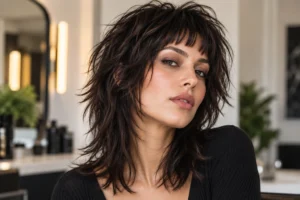
25. Edgy Shag With Micro Bangs
Micro bangs can turn a classic shag into a much stronger statement haircut. The short fringe creates a dramatic focal point while choppy layers continue through the sides and back. Keeping plenty of texture around the crown helps connect the bold fringe with the rest of the cut. This is one of the more adventurous shag hairstyles, making it ideal if you want your haircut to look deliberately unconventional.
How to Choose the Best Shag Hairstyle for Your Hair
A reference photo is helpful, but the best shag haircut is one that works with your own hair rather than simply copying another person’s cut.
Fine Hair
If your hair is fine, avoid removing too much weight from the ends. Ask for controlled crown layering and softer face-framing pieces so you can create movement while retaining visual fullness.
Thick Hair
Thick hair usually gives a stylist more room to remove interior weight. Strategic layering can reduce heaviness and allow waves or natural texture to move more freely.
Straight Hair
Straight hair shows the lines of a shag clearly. Feathered, point-cut, or softly choppy ends can keep the haircut from looking stiff.
Wavy Hair
Wavy hair naturally emphasizes shaggy layers. A cut that follows your existing wave pattern can create a relaxed result with relatively little daily styling.
Curly Hair
For curls, layer placement needs to account for shrinkage, curl pattern, and density. The goal is to create shape without leaving unwanted gaps between shorter and longer curls.
Choosing Shag Hairstyles by Face Shape
Face shape does not mean you have to follow strict haircut rules. Think of it as one factor your stylist can use when deciding where to place volume and face-framing layers.
Round Faces
Consider crown volume with longer pieces around the sides of the face. Curtain bangs or longer face-framing layers can create vertical and diagonal lines rather than concentrating all the volume around the cheeks.
Oval Faces
Oval faces can usually experiment with many versions of the shag, from short textured cuts to long layers and different fringe styles.
Square Faces
Soft, curved face-framing pieces and textured bangs can contrast nicely with a stronger jawline. Wavy and feathered finishes are particularly useful when you want softness.
Heart-Shaped Faces
Longer bangs and layers that develop more movement toward the cheekbones and jaw can create a balanced-looking shape.
Long or Oblong Faces
Avoid concentrating all the volume only at the very top if you do not want additional visual height. Fuller side layers and a fringe can help create more horizontal balance.
click here for more ideas about on hairstyle
What to Ask Your Stylist for a Shag Haircut
Simply saying “I want a shag” can lead to very different results because there are so many interpretations of the haircut.
Bring reference photos featuring a hair texture and density reasonably similar to your own. Then explain which specific parts of the haircut you like.
Discuss your preferred overall length, where you want the shortest layers to begin, how much volume you want at the crown, whether you prefer soft or choppy ends, and which type of fringe you want.
Most importantly, tell your stylist how you normally wear your hair. A shag designed for someone who air-dries every morning may need to be shaped differently from one intended for frequent blowouts or heat styling.
How to Style Shag Hairstyles
The easiest way to style a shag is usually to emphasize texture rather than trying to make every strand perfectly smooth.
For wavy hair, apply a light mousse or texturizing product to damp lengths and scrunch gently before air-drying or diffusing.
For straight hair, use a round brush or styling tool to create bends through selected face-framing pieces instead of curling every section.
Curly hair can benefit from curl cream or gel applied while the hair is damp. Diffusing can encourage volume around the crown without disturbing the curl pattern too much.
Whatever your texture, avoid using excessive heavy product around the roots because it can reduce the lift that gives a shag much of its character.
How to Maintain a Shag Haircut
How often you refresh your shag depends on the length, amount of layering, fringe, and how much you enjoy the grown-out appearance. Bangs usually show growth before the rest of the haircut, so they may need attention sooner. The overall layers can often grow out more softly because the haircut is already designed around movement and varied lengths. When the crown begins losing its shape or your face-framing layers no longer sit where you want them, it may be time for a trim. Using conditioner on the mid-lengths and ends can also help keep heavily textured hair looking healthy rather than dry.
Frequently Asked Questions
Are shag hairstyles good for fine hair?
They can be. The important part is controlling how much hair is removed. Fine hair generally benefits from strategic layering around the crown while maintaining enough density toward the ends.
Do shag haircuts work on curly hair?
Yes. Curly shag haircuts can create beautiful shape and redistribute volume throughout the hair. Layer length should be customized to the curl pattern and shrinkage.
Can you get a shag haircut without bangs?
Absolutely. Bangs are common but optional. Longer face-framing pieces can give you the shag effect while leaving the forehead open.
What is the difference between a shag and a wolf cut?
Both use noticeable layering and texture. A shag can range from soft to heavily layered, while a wolf-inspired cut usually emphasizes a stronger contrast between a voluminous crown and longer, narrower sections toward the back.
Are shag hairstyles high maintenance?
They can be relatively simple to style when the cut works with your natural texture. However, very polished versions and styles with short bangs may require more frequent styling and trims.
Is a shag suitable for long hair?
Yes. Long shag hairstyles maintain most of the overall length while adding shorter crown, face-framing, and interior layers for additional movement.
What products work well for a shag hairstyle?
The best products depend on hair texture. Lightweight mousse, texture spray, curl cream, styling cream, or light-hold paste can all be useful. Choose products that enhance movement without making the layers feel heavy.
Final Thoughts
Shag hairstyles are incredibly flexible because there is no single way to wear the cut. You can keep the layers soft and subtle, embrace a heavily textured short shag, maintain long lengths, add curtain bangs, highlight natural curls, or choose something much more dramatic. The most flattering result comes from adapting the haircut to your own hair texture, density, face-framing preferences, and everyday routine rather than trying to duplicate someone else’s hairstyle exactly. Whether you prefer a short shag bob, curly shag, long feathered cut, collarbone shag, or modern layered style with bangs, the right combination of length and texture can give your hair more movement while still feeling completely personal to you.