
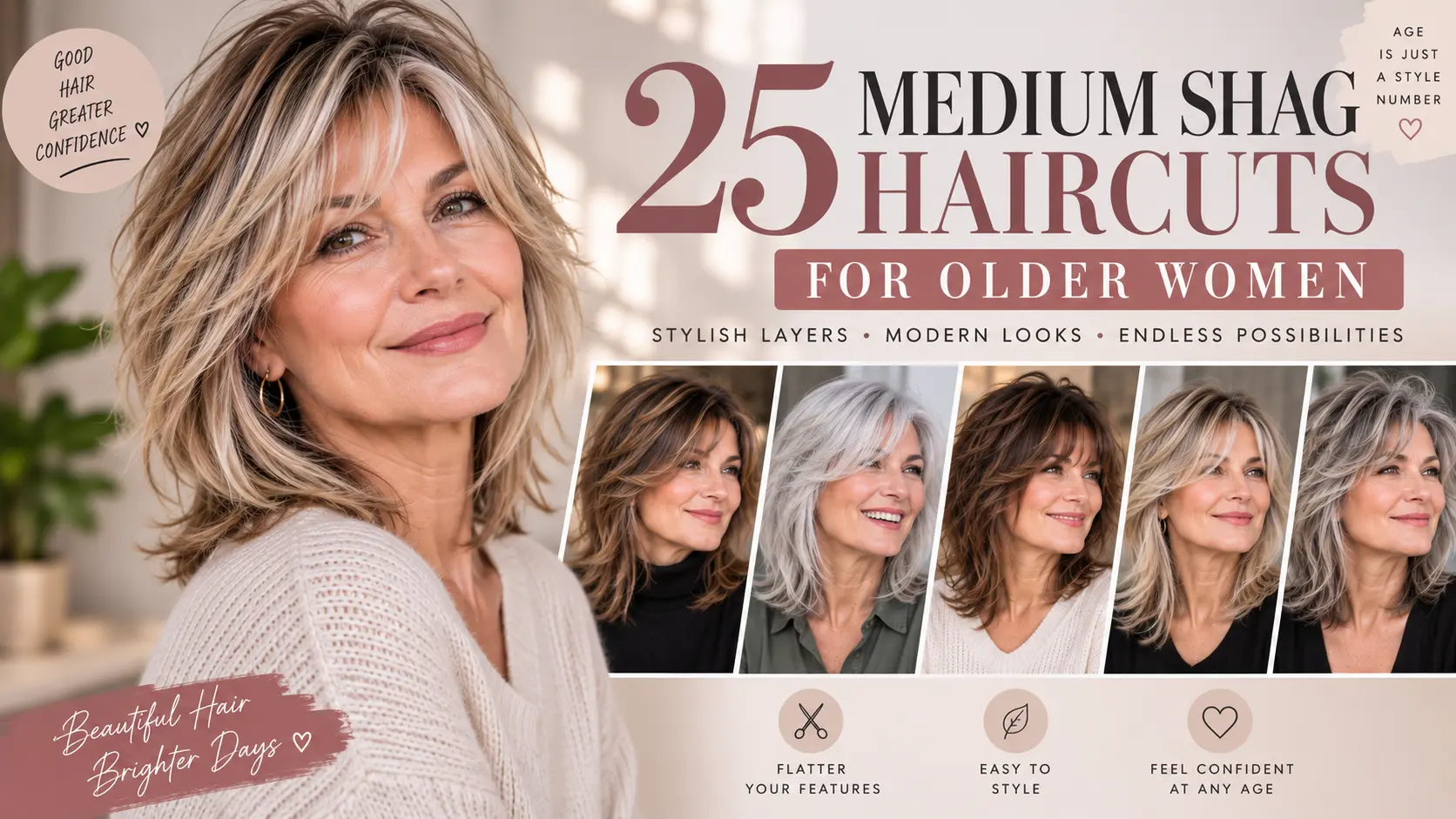
A great haircut should work with the hair you have now, not with a rigid idea of how hair is “supposed” to look at a certain age. Medium shag haircuts for older women are popular because they combine a manageable shoulder-to-collarbone length with layers that can add movement, shape, and visual fullness.
The modern shag is also far more flexible than the heavily choppy versions many people associate with the style. Layers can be subtle and blended, soft and feathered, naturally wavy, or more textured depending on your hair density and personal taste. Current 2026 hairstyle guidance consistently notes that the key is thoughtful layer placement: fine hair can lose fullness when over-layered, while thicker hair often benefits from additional internal shaping to reduce excess bulk. Medium length gives the shag enough space to show its movement without becoming difficult to manage. Whether your hair is straight, wavy, curly, fine, thick, naturally gray, or color-treated, the cut can be adjusted to fit your texture and styling routine.
1. Soft Layered Medium Shag
A soft layered shag is an ideal starting point if you like the movement of a shag but do not want an extremely choppy haircut. The layers gradually move from shorter sections near the face and crown into longer pieces around the shoulders. This creates visible texture while preserving enough weight through the perimeter to make the haircut feel full. The softer transitions can also make the style easier to wear straight, lightly waved, or air-dried.
2. Medium Shag With Face-Framing Layers
Face-framing pieces can completely change the front of a medium shag without requiring major changes to the overall length. The shortest sections can begin near the cheekbones, jaw, or lower depending on which part of the face you want to emphasize. Longer framing pieces usually create a softer, more flowing result, while shorter layers make the haircut more textured and noticeable. They can also blend naturally into bangs if you decide to add fringe later.
3. Shoulder-Length Shag With Wispy Bangs
Wispy bangs are a light alternative to a heavy fringe. Small sections fall across the forehead while enough space remains between them to keep the overall appearance soft. At shoulder length, the fringe can transition naturally into the upper layers of the shag. This gives the haircut movement around the face without creating a strong horizontal line across the forehead.
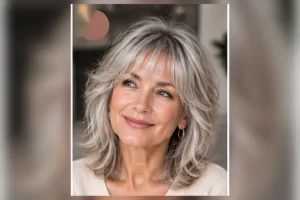
4. Feathered Medium Shag
Feathered layers create movement by encouraging the ends to sweep away from the face rather than sitting flat against one another. On medium hair, this technique can give the haircut a lighter, flowing appearance. A round brush can exaggerate the feathered direction during blow-drying, but the cut does not need to look highly styled. Even a subtle bend through the front layers can show the feathered shape clearly.
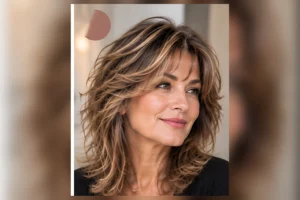
5. Wavy Medium Shag With Curtain Bangs
Natural waves and shag layers are a particularly useful combination because the haircut gives individual bends more room to form. Curtain bangs open through the center and gradually become longer toward the sides, where they blend into the surrounding layers. The result feels soft rather than overly structured. If your hair naturally has wave, this version may also require less heat styling because the texture already supports the shag’s movement.
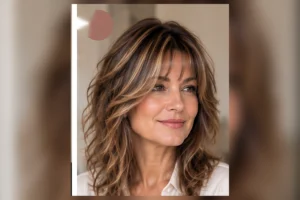
6. Medium Shag for Fine Hair
Fine hair needs careful layering. Cutting too many short layers can remove the density that helps the ends look full, so a more controlled approach often works better. The strongest movement can be concentrated around the crown and face while more weight remains through the lower section. Current stylist guidance for medium shags specifically warns that too many short layers can make fine hair appear thinner.
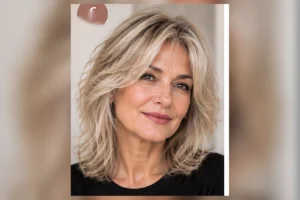
7. Medium Shag for Thick Hair
Thick hair can usually support stronger layering because there is more density available to work with. Interior layers can remove excess weight and help the hair move more freely. The goal is not simply to thin the hair everywhere. Strategic weight removal allows the crown and mid-lengths to gain movement while preserving enough fullness around the ends for a balanced shape.
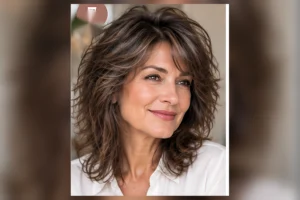
8. Straight Medium Shag
Straight hair can make the structure of a shag particularly visible. Layered sections show clearly because there is less natural curl or wave to disguise the different lengths. For a softer effect, the layers can be blended rather than highly disconnected. Light texturizing through the ends can prevent the haircut from looking heavy while still maintaining a polished appearance.
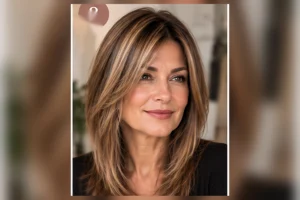
9. Tousled Medium Shag
A tousled shag is designed to look slightly undone rather than perfectly smooth. Different layer lengths create natural separation, which makes the style suitable for anyone who prefers relaxed hair over a formal blowout. A lightweight texture product can enhance the layers, but using too much can reduce the natural movement. The best finish should still feel flexible and touchable.
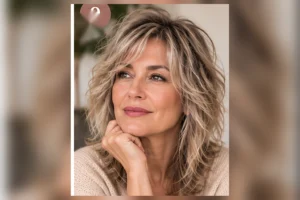
10. Medium Shag With Side-Swept Bangs
Side-swept bangs create a diagonal line across the forehead and can give the front of the haircut more direction. The longer fringe gradually blends into the face-framing layers around one side. This is also a practical choice if you are growing out shorter bangs. As the fringe becomes longer, it can simply become another layer within the shag.
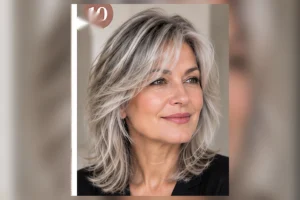
11. Collarbone-Length Shag
A collarbone-length shag gives you slightly more length than a traditional shoulder cut while still remaining manageable. It also provides enough room for multiple layers without making the lower perimeter feel too short. This length can be worn straight, loosely waved, or tied back, making it useful if you want a layered haircut without losing everyday styling flexibility.
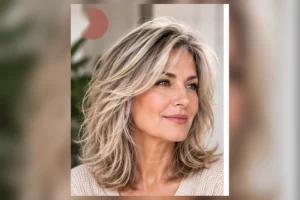
12. Medium Shag With Crown Volume
Shorter layers through the upper crown can create visible lift and prevent medium hair from appearing flat. This is particularly useful when the rest of the haircut remains relatively soft. The crown layers should still be customized to density. Fine hair may need fewer short pieces, while thicker hair can usually support stronger layering without losing fullness.
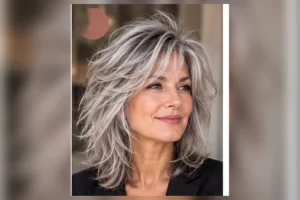
13. Shag With Soft Curtain Fringe
A soft curtain fringe creates an open center and longer sections toward the cheekbones. Because those longer pieces naturally connect with a shag’s face-framing layers, the fringe does not feel separate from the rest of the haircut. This is one of the more flexible bang options because it can be worn parted through the center, slightly off-center, or gradually grown into longer front layers.
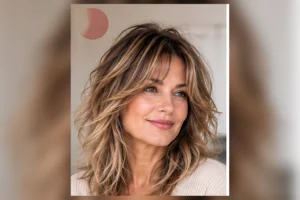
14. Medium Shag With Bouncy Layers
Bouncy layers focus on movement rather than heavily choppy texture. The sections are cut so they can lift away from one another when styled with a round brush or larger rollers. This approach works well if you like the layered shape of a shag but prefer a softer, more polished finish. It can also make medium hair feel lighter without requiring an extremely textured perimeter.
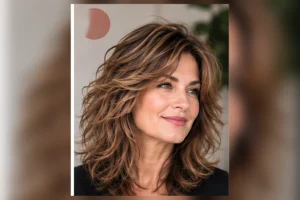
15. Natural Gray Medium Shag
Gray hair can look particularly dimensional in a layered haircut because the different tones naturally catch light across the various lengths. Silver, white, charcoal, and darker strands can become more visible as the layers move. The cut itself does not need to be dramatically different because the hair is gray. Texture, density, and condition are more useful considerations than color alone when deciding how much layering to add.
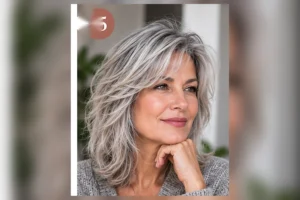
16. Medium Shag With Flipped Ends
Flipped ends give a medium shag a playful finish. The upper layers can remain softly textured while selected sections near the sides and shoulders are turned outward. A round brush can create the flip during blow-drying. You can keep it subtle for an everyday look or exaggerate the direction when you want stronger retro-inspired movement.
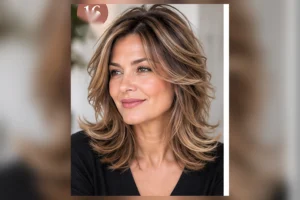
17. Air-Dry Medium Shag
An air-dry shag is designed around the way your hair naturally falls rather than around a salon blowout. This can be particularly useful for naturally wavy or softly textured hair. The stylist should consider how your hair behaves when it dries without heat and position the layers accordingly. A haircut that works with your natural pattern is usually much easier to maintain day to day.
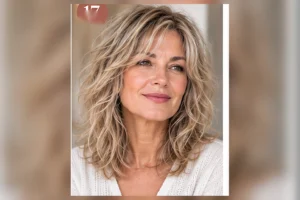
18. Medium Shag With Rounded Layers
Rounded layers provide movement without producing the sharp, broken outline associated with more dramatic shags. Each layer gradually curves into the next, creating a fuller overall silhouette. This version can feel especially polished on straight or softly wavy hair. A smooth blowout can highlight the rounded structure, but the haircut can also be worn more casually.
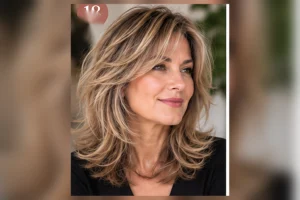
19. Choppy Medium Shag
A choppy shag uses more visible differences between individual layer lengths. The result has stronger texture and an intentionally relaxed appearance. This style usually works best when there is enough density to support the extra layering. On very fine hair, excessive choppiness can reduce visual fullness, so the degree of texture should be adjusted accordingly.
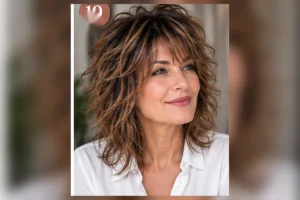
20. Medium Shag With Long Bangs
Long bangs offer face framing without the maintenance of a short fringe. They can sit around the cheekbones or lower and blend directly into the surrounding shag layers. The fringe can be parted through the middle, swept to one side, or tucked back when you want the forehead completely open. This makes it one of the more adaptable options.
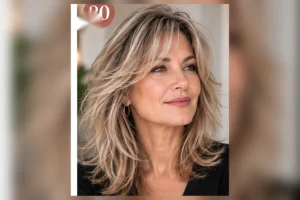
21. Curly Medium Shag
Curly hair can create a beautifully dimensional shag because different layer lengths allow curls to form at different heights. Instead of leaving all the fullness around the lower section, crown and face-framing layers can redistribute volume. Shrinkage needs to be considered carefully before cutting. The shortest curls may spring considerably higher when dry, so the finished natural shape matters more than how the haircut looks when wet.
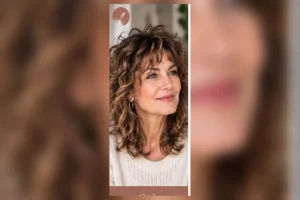
22. Razor-Textured Medium Shag
When appropriate for the hair type, razor cutting can create lightweight, feathered ends and reduce the appearance of heavy lines. This technique is not automatically ideal for every texture or hair condition, so the stylist should decide whether a razor, scissors, or a combination will create the healthiest finish. The goal is softness and movement rather than simply making the hair thinner.
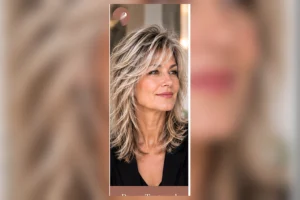
23. Medium Shag With Subtle Waves
Subtle waves give a shag movement without making the haircut look overly styled. Larger bends through the mid-lengths can show the layers while keeping the overall appearance soft. This is particularly useful if you prefer a polished but relaxed look. The waves can be created with a round brush, large curling tool, or encouraged from natural texture.
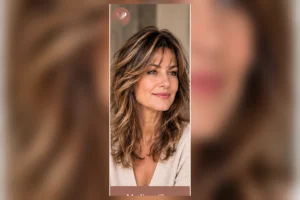
24. Low-Maintenance Blended Shag
A blended shag keeps the layer transitions gradual so the haircut grows out more softly. Rather than using very short crown layers or a highly broken perimeter, the stylist creates controlled movement throughout the length. This can be a good option if you prefer longer gaps between salon visits or do not want a haircut that depends heavily on daily styling.
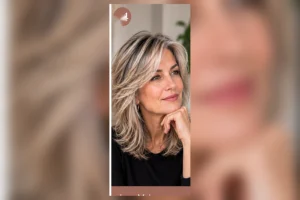
25. Modern Medium Shag With Soft Volume
A modern medium shag combines several of the most wearable elements of the style: crown lift, soft face framing, a substantial perimeter, and enough texture for movement without looking overly choppy. This version can be adapted to straight, wavy, or lightly curly hair and styled in several different ways. It is a strong choice if you want the character of a shag while keeping the finish versatile and polished.
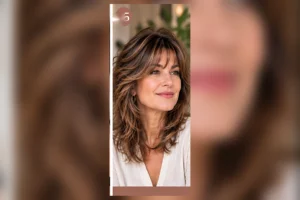
Why Medium Shags Work Well With Different Hair Types
One reason the shag remains versatile is that the amount and position of layering can be changed significantly. Fine hair generally benefits from preserving enough weight through the lower sections, while thicker hair often needs more internal layering to remove heaviness. Current hairstylist guidance specifically emphasizes these different approaches rather than treating all shag cuts the same.
Straight hair displays the layer structure clearly, while waves and curls naturally emphasize texture. The haircut should therefore be planned around what your hair already does rather than forcing every texture into the same reference photo.
Choosing Bangs for a Medium Shag
Bangs can significantly change the appearance of a medium shag. Wispy bangs keep the front light, curtain bangs create a center opening, side-swept bangs add diagonal movement, and longer fringe provides face framing with less maintenance. The best option depends on your growth pattern, density, forehead, and how often you are willing to style the fringe. There is no age-based rule requiring a particular type of bang.
Medium Shag for Fine or Thinning Hair
A shag can create the appearance of additional movement and shape, but more layers do not automatically mean fuller-looking hair. Fine or lower-density hair may look better with fewer short layers and a stronger lower perimeter. Current 2026 medium-shag guidance similarly recommends avoiding excessive short layering on fine hair because it can make the overall shape appear thinner.
If hair thinning is new, significant, or concerning, a haircut can change appearance but does not treat the cause of hair loss. In that situation, a qualified medical professional can help assess the underlying issue.
Medium Shag for Thick Hair
Thick hair can support stronger layers and more texture, but the haircut should still be shaped intentionally. Removing internal bulk can create movement without making the ends appear unnecessarily thin. A stylist can decide where the hair feels heaviest and remove weight selectively instead of texturizing the entire haircut equally. This usually produces a more balanced result.
What to Ask Your Stylist
Rather than simply asking for a “medium shag,” explain how much texture you actually want. Some shags are soft and blended, while others have dramatic crown layers and highly textured ends.
Tell your stylist whether you want bangs, where you prefer the shortest face-framing piece to begin, how much crown volume you like, and whether you normally air-dry or heat-style your hair. Bringing reference photos with hair texture and density similar to yours can make the conversation much clearer.
How to Style a Medium Shag
For straight or softly wavy hair, a lightweight volumizing product can be applied before drying, with extra lift directed toward the crown. A round brush can turn face-framing sections away from the face or create subtle flips through the ends. Naturally wavy hair may need little more than mousse or styling cream and gentle scrunching. Curly hair can be styled with curl-appropriate products and a diffuser while preserving the haircut’s natural layered shape.
If you regularly use a blow-dryer, flat iron, or curling tool, the American Academy of Dermatology recommends limiting excessive heat, using low or medium heat settings, and using a heat-protective product to reduce hair damage.
How to Maintain a Medium Shag
The ideal trim schedule depends on how structured the haircut is. A heavily layered shag with bangs may show growth sooner, while a longer blended shag can often grow out more gradually. Instead of relying on one fixed number of weeks, pay attention to the shape. When the crown begins feeling heavy, fringe becomes difficult to control, or the layers stop moving the way you like, it may be time for reshaping.
Conditioning is also important, especially when the ends are heavily textured. The American Academy of Dermatology recommends using conditioner after washing and adjusting hair-care products to your hair type.
Medium Shag vs. One-Length Hair
A one-length haircut keeps most of the weight concentrated around the perimeter, which can produce a sleek and substantial outline. A shag redistributes some of that weight through layers, creating more movement around the crown, face, and mid-lengths.
Neither approach is inherently better. If you enjoy a strong, smooth perimeter, a one-length cut may suit you. If you want visible texture and movement, a shag offers more opportunities for layering.
Frequently Asked Questions
Are Medium Shag Haircuts Good for Fine Hair?
They can be, provided the haircut is not over-layered. Strategic crown and face-framing layers can create movement, while preserving enough hair through the perimeter helps fine hair maintain visual fullness.
Do Medium Shags Work on Thick Hair?
Yes. Thick hair can often support additional internal layers and texturizing to reduce unwanted bulk while keeping enough density for a full-looking shape.
Can Straight Hair Wear a Medium Shag?
Yes. Straight hair often shows the different layer lengths very clearly. Soft feathering or subtle texturing can add movement without requiring natural waves.
Does a Shag Work With Gray Hair?
Yes. Natural gray hair can be cut into the same range of shag shapes as pigmented hair. Density, texture, condition, and styling preference matter more than hair color.
What Bangs Work With a Medium Shag?
Curtain, wispy, side-swept, soft straight, and longer bangs can all work. The fringe should be selected according to your hair texture, growth pattern, and preferred maintenance level.
Is a Medium Shag High Maintenance?
It depends on the version. A highly textured shag with a short fringe may require more frequent shaping, while a blended shoulder-length shag can be relatively forgiving as it grows.
Can You Air-Dry a Medium Shag?
Yes, particularly when the haircut is designed around natural waves or curls. Straight hair can also be air-dried, although the layered structure may appear softer without a blowout.
What Length Is Considered a Medium Shag?
Medium shag hair generally falls somewhere around the shoulders to collarbone area, although exact definitions vary. This length provides enough room for visible layering while remaining manageable.
Can Curly Hair Have a Medium Shag?
Yes. Curly shag layers can redistribute volume and allow individual curls to form at different heights. Shrinkage should be considered before choosing the shortest layers.
Final Thoughts
Medium shag haircuts for older women can be soft, polished, textured, curly, feathered, straight, or deliberately messy. The term “shag” describes a family of layered shapes rather than one fixed haircut, which is why the style can be adapted to so many different textures and densities.
The most useful approach is to decide how much volume, movement, fringe, and texture you actually want. Fine hair usually benefits from controlled layering, thick hair can often support more weight removal, and waves or curls can use the layers to enhance natural texture.