

Trying bangs is one of the easiest ways to change your hairstyle without cutting off all your length. A fringe can completely shift the way your haircut frames your eyes, forehead, cheekbones, and overall face shape, which is why there are so many different bangs styles to choose from.
The best fringe is not necessarily the trendiest one. Your natural texture, hair density, growth pattern, forehead, face shape, and willingness to style your bangs every morning all matter. Current 2026 hairstyle guidance also emphasizes customization rather than treating one fringe as universally “best.” Curtain bangs, wispy fringe, curly bangs, full bangs, and micro bangs are all being worn in more personalized ways this year.
1. Curtain Bangs
Curtain bangs part near the center and gradually become longer toward the sides, creating a soft frame around the face. They are one of the easiest fringe styles to blend into medium or long layers because the outer pieces naturally connect with the rest of the haircut.
They are also a practical choice if you are trying bangs for the first time. Starting slightly longer gives you room to experiment with the shape before committing to a shorter fringe. Current 2026 trend coverage continues to highlight curtain bangs, but with more individualized lengths and shapes rather than one standard cut.
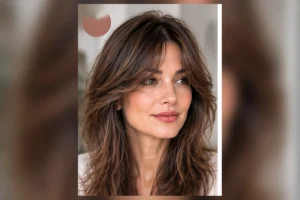
2. Wispy Bangs
Wispy bangs are light, airy, and intentionally less dense than traditional full bangs. Small sections fall across the forehead while enough space remains between the strands to keep the overall look soft. This style can work especially well when you want fringe without making the front of your haircut feel heavy. It also blends easily into layered cuts and can be worn straight, slightly curved, or softly textured.
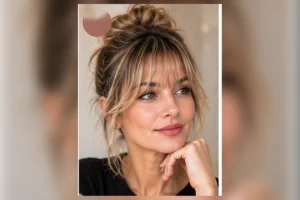
3. Blunt Bangs
Blunt bangs create a strong line across the forehead and give the haircut a polished, graphic appearance. They usually look most precise on straight or smooth hair because the clean edge remains easy to see. The density can be adjusted depending on how bold you want the result. A full thick fringe creates a strong statement, while a slightly lighter blunt bang keeps the structure without feeling as heavy.
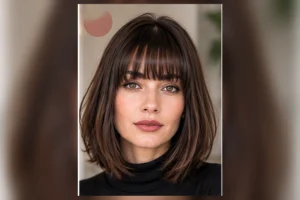
4. Side-Swept Bangs
Side-swept bangs move diagonally across the forehead instead of falling straight down. Their longer shape makes them easy to blend into layers and gives you more styling flexibility than many shorter fringe styles. They can be worn with pixies, bobs, medium hair, and long layers. If you later decide to grow them out, they often transition naturally into longer face-framing pieces.
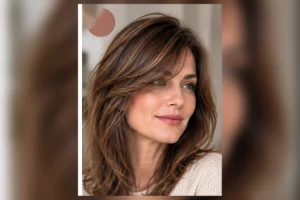
5. Bottleneck Bangs
Bottleneck bangs are shorter near the center and gradually become longer toward the cheekbones, creating a curved shape around the face. They sit somewhere between curtain bangs and a fuller fringe. The center creates more definition than a classic curtain bang, while the longer sides preserve softness and movement.
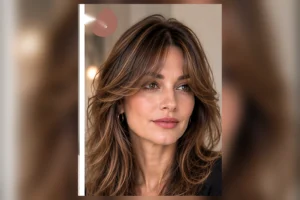
6. Micro Bangs
Micro bangs are cut well above the eyebrows and create one of the boldest fringe looks. They expose more of the forehead and immediately draw attention toward the eyes. Because the fringe is so short, small amounts of growth become noticeable quickly. Current 2026 trend coverage continues to feature micro bangs as a strong statement option.
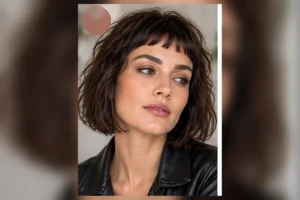
7. Baby Bangs
Baby bangs are short bangs that typically sit higher on the forehead than a traditional fringe but may be slightly longer or softer than extreme micro bangs. They work particularly well when you want a vintage, artistic, or fashion-forward look. The ends can be blunt, textured, curved, or lightly separated depending on the finish you want.

8. Curly Bangs
Curly bangs allow your natural curl pattern to become part of the fringe instead of straightening the front section separately.
Their final length needs to account for shrinkage because curls can sit much higher once they dry. A stylist should evaluate the natural curl pattern before deciding where the fringe should fall. Curly fringe is also one of the prominent bang directions in current 2026 trend coverage.
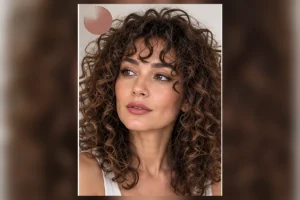
9. Wavy Bangs
Wavy bangs keep their natural bends rather than being pressed into a perfectly straight shape. They can create a softer, more relaxed finish that works well with layered and shoulder-length hair. The fringe can be kept airy or slightly fuller depending on your density. Styling it with lightweight product rather than heavy smoothing creams helps preserve the movement.
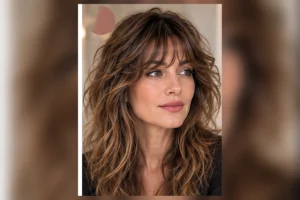
10. Feathered Bangs
Feathered bangs are cut and styled so the ends move softly away from the face. The result feels light and slightly retro without looking overly structured. They work particularly well with layered hair because the fringe can blend smoothly into the surrounding sections. A round brush can exaggerate the feathered direction, while air-drying produces a softer version.

11. Choppy Bangs
Choppy bangs use uneven lengths and textured ends instead of one perfectly clean edge. The result feels more relaxed and intentionally undone. They pair naturally with shags, wolf cuts, and textured bobs because the fringe mirrors the movement already present throughout the haircut.

12. Shaggy Bangs
Shaggy bangs are soft, textured, and usually slightly irregular in length. They are designed to look connected to a shag rather than sitting like a separate fringe across the forehead. This style works best when the surrounding haircut also has visible layering and movement. If you like this type of texture, you can also explore your existing shag hairstyles guide for more layered haircut inspiration.
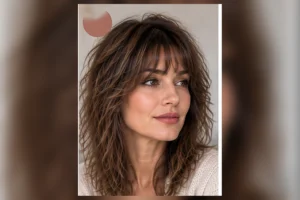
13. Korean Air Bangs
Korean air bangs are very light, piecey, and usually allow plenty of forehead to remain visible. They often fall around eyebrow or lash level without creating a dense, heavy line. This fringe works especially well when you want a subtle change. Hair.com describes Korean air bangs as ultra-light, separated strands that typically fall between the eyebrows and eyelashes.

14. Rounded Bangs
Rounded bangs form a gentle curve rather than a perfectly straight horizontal line. The center may sit slightly shorter, with the sides becoming longer as they approach the temples. This shape can make full bangs feel softer and more connected to the rest of the haircut. It works particularly well when the fringe is styled smooth enough for the curve to remain visible.
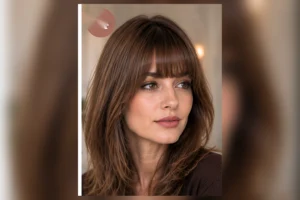
15. Arched Bangs
Arched bangs have a more deliberate curved shape across the forehead, often becoming gradually longer near the outer edges. The curved line gives the fringe structure without feeling as severe as a completely blunt cut. They pair well with sleek bobs, medium-length cuts, and polished layered styles.
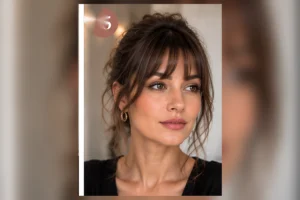
16. Face-Framing Bangs
Face-framing bangs are longer fringe pieces designed to blend directly into the layers around the face. They may begin near the cheekbones or jaw rather than sitting fully across the forehead. This is one of the lower-commitment ways to experiment with bangs because the pieces can often be tucked behind the ears or styled away from the face.
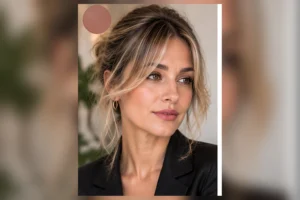
17. Long Layered Bangs
Long layered bangs keep enough length to move easily into the rest of the haircut. The front may fall around the cheekbones, jaw, or lower depending on your overall hair length. This fringe is highly flexible because it can be center-parted, side-swept, curled outward, or tucked back. It also tends to grow out more softly than short blunt bangs.

18. Long Side-Swept Fringe
A long side-swept fringe creates a deep diagonal across the front of the hairstyle. The longest sections usually blend into cheekbone- or jaw-length layers. This style gives you the appearance of bangs while preserving enough length for easy styling. It works especially well if you prefer a deep side part or want a fringe that can easily be pinned back.

19. Layered Fringe
Layered fringe combines several slightly different lengths rather than creating one solid line. The variation gives the bangs more movement and helps them blend with layered haircuts. This approach can be soft and subtle or more textured depending on how much difference there is between the shortest and longest sections.

20. Split Bangs
Split bangs naturally separate near the center, creating two sections that frame the forehead. They can resemble curtain bangs, but the part can be more defined and the fringe itself can remain shorter. They are useful if your bangs naturally separate rather than sitting evenly across the forehead. Instead of fighting that growth pattern, the haircut can be shaped around it.
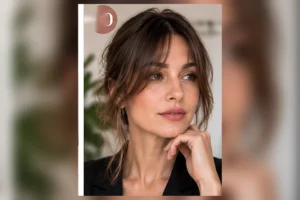
21. Heavy Full Bangs
Heavy full bangs use more hair to create a dense fringe that covers much of the forehead. They produce a dramatic change and immediately become one of the strongest features of the haircut. Hair density matters with this style. Fine hair may need careful sectioning to avoid removing too much fullness from the rest of the haircut, while thick hair may need internal weight removal to keep the fringe from puffing outward.

22. Bardot Bangs
Bardot bangs are soft, voluminous fringe pieces inspired by classic 1960s styling. They usually have shorter pieces around the center and longer, sweeping sections around the sides. They create more volume than delicate curtain bangs and look particularly good with layered blowouts and medium-to-long hair.

23. Birkin Bangs
Birkin bangs are soft, slightly long, and intentionally separated rather than perfectly blunt. They usually graze the eyebrows or sit just below them for a relaxed French-inspired finish. They are less structured than traditional full bangs and can work well when you want a fringe that looks slightly lived-in rather than salon-perfect.

24. Bowl Bangs
Modern bowl bangs create a rounded, graphic fringe that connects with the surrounding short haircut. The shape is deliberate and usually much more polished than the old-fashioned bowl-cut stereotype. Bowl-style fringe is specifically being highlighted as a bold 2026 bang trend, especially with sleek short hair and bobs.

25. Blended Long Fringe
Blended long fringe is designed to almost disappear into the surrounding haircut. The shortest pieces provide some framing, while the longer pieces connect seamlessly into the main layers. This is one of the easiest styles to grow out because there is no sharp separation between the fringe and the rest of the hair. It is a strong choice if you want the effect of bangs without committing to a clearly defined fringe.

How to Choose Between Different Bangs Styles
Choosing fringe is easier when you look beyond the style name. Length, density, texture, and parting all change how bangs behave.
Current fringe guides emphasize that face shape, natural texture, hair thickness, and styling routine should all be considered before cutting bangs. Curly hair behaves differently from straight hair, and a fringe that looks effortless on one density may need much more daily work on another.
If you are unsure, starting longer usually gives you more flexibility. You can always shorten the fringe later, while growing out bangs that were cut too short takes considerably more time.
Different Bangs Styles by Hair Texture
Straight hair shows clean bang shapes clearly, which makes blunt, rounded, bowl, and micro bangs especially defined. Wavy hair naturally softens those lines and works well with curtain, wispy, shaggy, and feathered fringe.
Curly hair can support bangs beautifully, but shrinkage needs to be considered before cutting. Coily hair can also wear fringe, although the finished shape will depend heavily on curl pattern, density, and how the hair is normally styled.
Fine hair generally benefits from lighter fringe or careful sectioning so too much density is not removed from the rest of the haircut. Thick hair can support fuller bangs but may need internal texturizing to control weight.
Choosing Bangs by Face Shape
Face shape can help guide the length and shape of your fringe, but it should not be treated like a strict rule. Hair.com’s updated 2026 guide specifically emphasizes customization rather than suggesting one bang style works automatically for everyone with the same face shape.
Longer curtain or side-swept fringe creates diagonal movement, blunt fringe creates a stronger horizontal line, and micro bangs expose more of the forehead. The best choice depends on which features you want the fringe to emphasize.
What to Ask Your Stylist Before Getting Bangs
Instead of showing only one reference photo, explain which parts of the fringe you actually like. Discuss the length, density, parting, texture, and whether you want the bangs to blend into surrounding layers.
You should also mention cowlicks, natural parting, curl pattern, how often you heat-style, and how much daily effort you are comfortable with. These practical details can matter just as much as the fringe style itself.
How to Style Bangs
For smooth bangs, direct airflow downward while blow-drying so the fringe stays controlled. Curtain and feathered bangs can be shaped with a small or medium round brush, while textured bangs often look better when they are not over-smoothed.
Curly and wavy fringe should usually be styled according to the natural pattern rather than repeatedly straightened. Heavy products can make short bangs look greasy quickly, so lightweight formulas are often easier to manage.
If you regularly use a blow-dryer, flat iron, or curling tool on your bangs, follow these dermatologist-reviewed healthy hair care tips from the American Academy of Dermatology. AAD recommends limiting excessive heat and using low or medium heat settings to reduce damage.
How Often Do Bangs Need Trimming?
Trim frequency depends heavily on length. Micro, baby, blunt, and full bangs tend to show growth sooner because their shape depends on a precise position around the forehead.
Curtain, side-swept, and long layered bangs can usually grow for longer without looking dramatically different. Current 2026 trend coverage also notes that very short micro fringe requires more frequent trimming to keep its intended shape.
Which Bangs Are Lowest Maintenance?
Long curtain bangs, side-swept fringe, face-framing bangs, and blended long fringe are generally among the easier options to grow and restyle because they do not depend on one extremely precise short length.
Short blunt bangs, micro bangs, and bowl fringe require more regular maintenance if you want to preserve the original shape.
Frequently Asked Questions About Different Bangs Styles
What Are the Most Popular Bang Styles in 2026?
Current 2026 coverage highlights curtain bangs, wispy bangs, curly fringe, micro bangs, bold full fringe, and modern bowl bangs among the notable styles.
What Bangs Are Best for Beginners?
Long curtain bangs and longer side-swept fringe are often easier first choices because they provide more styling flexibility and can grow into face-framing layers relatively smoothly.
What Is the Difference Between Curtain Bangs and Bottleneck Bangs?
Curtain bangs generally open from the center and sweep gradually outward. Bottleneck bangs tend to be shorter and narrower through the center before widening toward the cheekbones.
What Is the Difference Between Baby Bangs and Micro Bangs?
The names sometimes overlap, but micro bangs generally describe an extremely short fringe positioned high on the forehead. Baby bangs may be slightly longer or softer while still remaining noticeably shorter than standard fringe.
Can Curly Hair Have Bangs?
Yes. Curly fringe can work beautifully when the cut accounts for natural shrinkage, curl pattern, and volume. Current 2026 bang coverage specifically includes curly fringe as a major option.
Are Wispy Bangs Good for Fine Hair?
They can be because they use less hair than a dense full fringe. However, the stylist should still consider overall density so the surrounding haircut retains enough fullness.
Are Bangs High Maintenance?
Some are and some are not. Short, precise fringe usually requires more frequent trims and styling, while longer curtain or blended bangs tend to be more forgiving.
Can I Wear Bangs With a Bob?
Yes. Blunt, wispy, curtain, micro, side-swept, and rounded fringe can all be paired with bobs. The choice depends on the overall shape and texture you want.
Can Bangs Make Hair Look Fuller?
Certain fringe styles can create the appearance of fullness around the front, especially when the hair has enough density to support them. However, removing too much hair for a heavy fringe can reduce fullness elsewhere.
Final Thoughts
There are many different bangs styles, and the biggest mistake is assuming fringe is one single haircut. Curtain bangs can feel soft and low commitment, blunt bangs can look sharp and polished, curly bangs celebrate natural texture, while micro and bowl fringe create a much stronger statement.
The best choice depends on your hair texture, density, growth pattern, styling routine, and the amount of maintenance you want. Instead of copying one reference photo exactly, use it as a starting point and adjust the length, thickness, and shape to your own hair.