
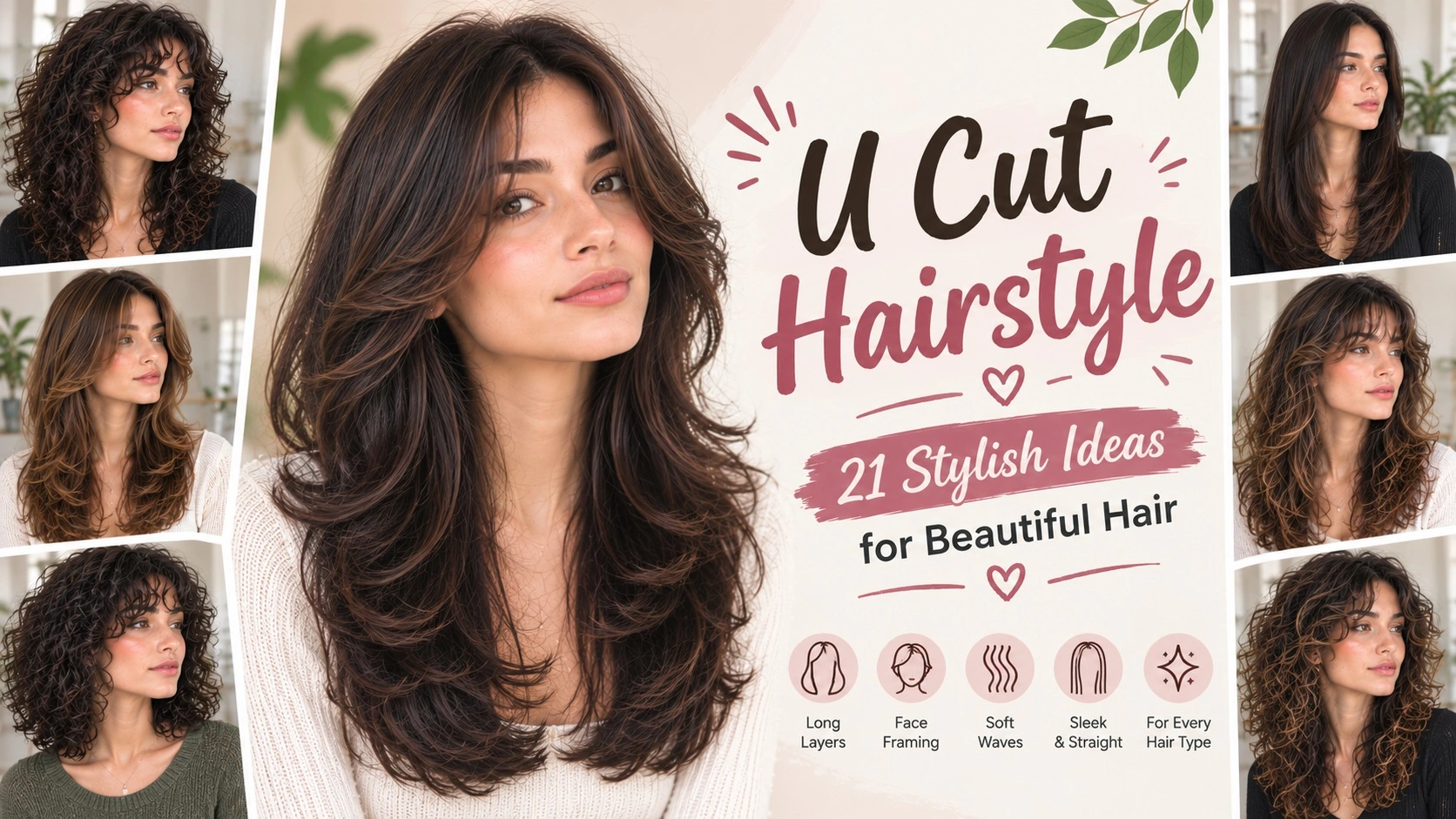
Looking for a haircut that makes your hair look stylish, healthy, and full of movement without sacrificing too much length? A u cut hairstyle may be exactly what you need. This timeless haircut features a softly curved outline at the back, creating the shape of the letter U instead of a straight-across edge or a sharp V-shaped point.
One of the biggest advantages of a U-shaped haircut is its versatility. You can wear it sleek and straight, add soft waves, combine it with long layers, or frame your face with curtain bangs. It can also be customized for different hair lengths and textures, making it a flexible option for everyday styling.
Whether you have waist-length hair, medium-length locks, fine strands, or thick waves, there is a U cut that can complement your natural texture and personal style.
In this guide, explore 21 beautiful U cut hairstyle ideas, learn how to choose the right variation, and discover simple styling and maintenance tips to keep your hair looking its best.
What Is a U Cut Hairstyle?
A U cut hairstyle is a haircut in which the ends form a rounded, U-shaped curve when viewed from the back. The hair in the center remains longer, while the sides gradually curve upward toward the front.
Unlike a blunt haircut, which creates a relatively straight edge, a U cut gives the hair a softer outline. It can be worn with or without layers, depending on how much movement and texture you want.
The U-shaped outline and the layers are two separate features. You can request a simple U-shaped perimeter for a clean, natural finish or add blended layers for extra movement and face-framing detail.
Why Choose a U-Shaped Haircut?
- Keeps your length: The rounded shape lets you refresh long hair without making a dramatic change.
- Creates a softer outline: The curved ends look less severe than a straight-across cut.
- Works with different textures: Straight, wavy, and curly hair can all be shaped into a U.
- Offers styling flexibility: Wear your hair loose, in waves, in a ponytail, or in a braid.
- Can be customized: Choose subtle layers, dramatic face-framing pieces, or a simple one-length shape.
1. Classic Long U Cut Hairstyle
The classic long U cut is a beautiful choice for anyone who loves long hair but wants a more polished shape. The back curves gently into a U, leaving the middle section slightly longer than the sides.
This version works particularly well when you want a neat, flowing finish without lots of visible layers. It also gives straight and wavy hair a more intentional shape.
Styling tip: Blow-dry with a paddle brush and finish with a small amount of lightweight serum on the ends. Ask your stylist for a soft curve rather than an exaggerated U if you prefer a natural look.
2. Long Layered U Cut Hairstyle
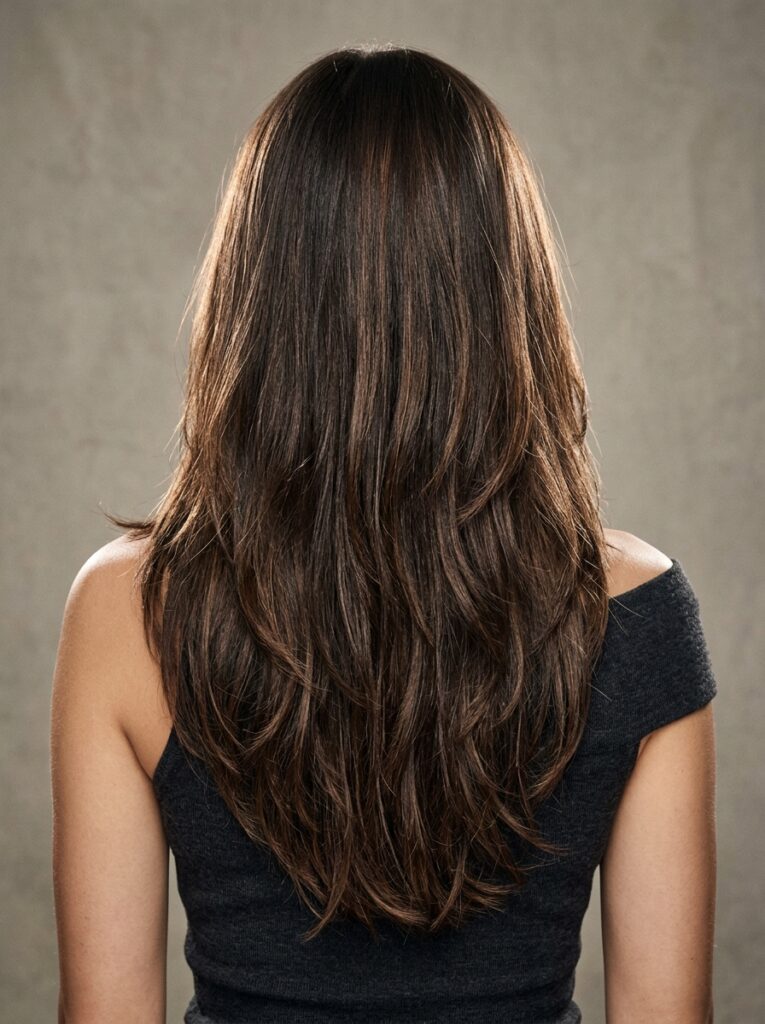
A layered U cut combines a rounded perimeter with blended layers throughout the hair. The result is a flowing silhouette with more movement than a simple one-length cut.
This style is especially appealing for long hair that feels heavy or looks flat through the lengths. Layers can help the hair move more freely while the U-shaped outline maintains a balanced finish.
Styling tip: Use a round brush while blow-drying to create lift and a gentle bend through the ends. Keep the layers blended if you want to preserve fullness.
3. U Cut with Face-Framing Layers
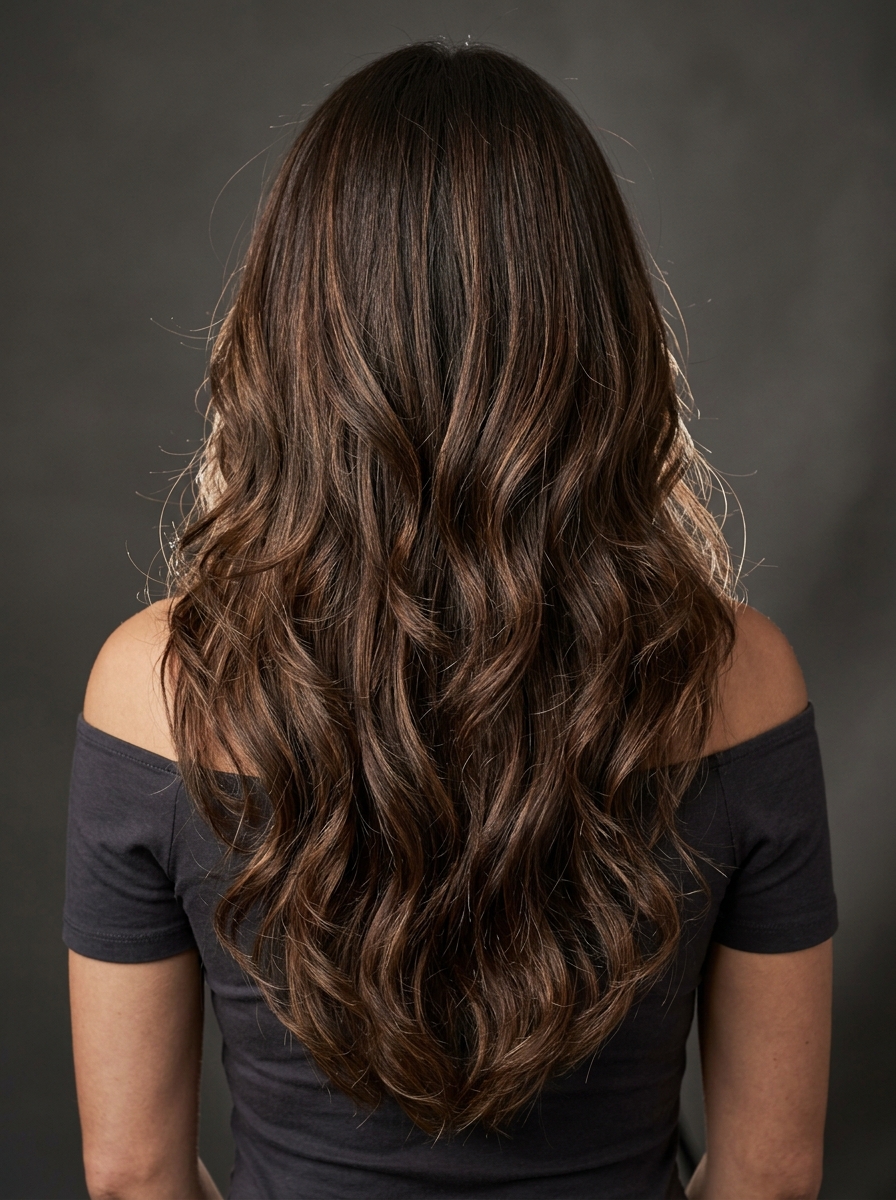
Face-framing layers add shorter pieces around the cheeks, jawline, or collarbone while the back retains its U-shaped outline. This creates a softer appearance around the face without removing too much length from the rest of the hair.
You can customize the starting point of the layers to suit your preferred look. Shorter pieces create more definition, while longer pieces offer a subtle, blended effect.
Styling tip: Blow-dry the front sections away from your face using a round brush. Finish with a lightweight styling cream to keep the pieces smooth and separated.
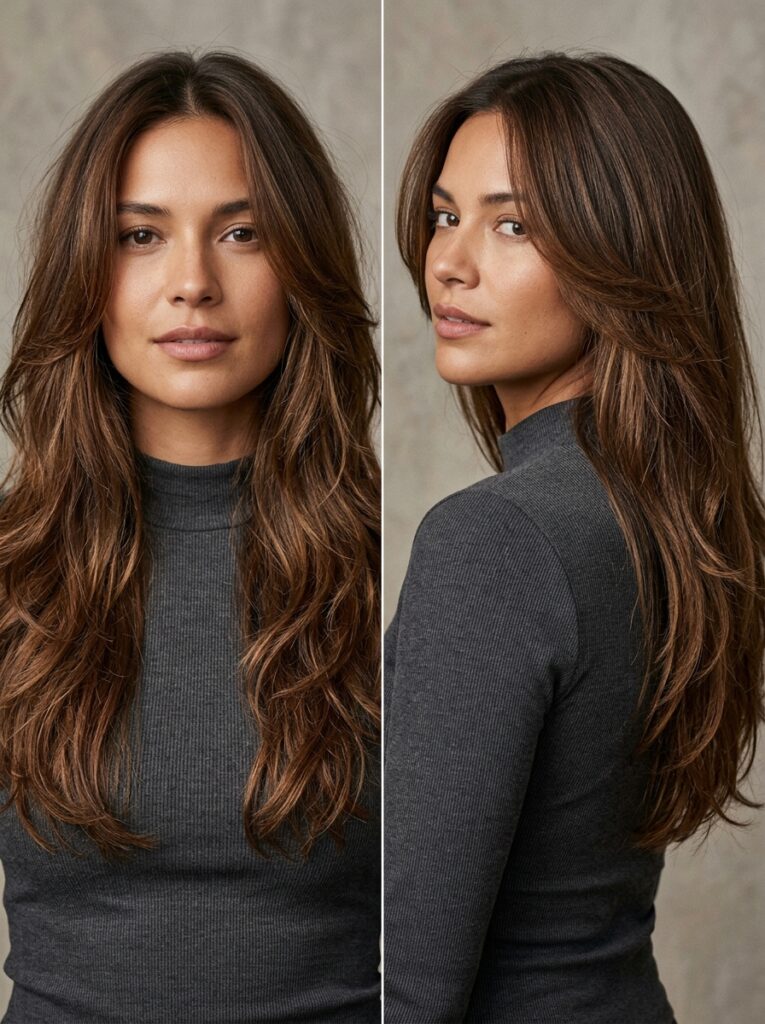
4. U Cut with Curtain Bangs
PRIVATE_PERSON bangs and a U-shaped haircut create a relaxed, modern combination. The bangs part near the middle and sweep toward the sides, while the curved back adds flow to the overall silhouette.
This look is ideal if you want a noticeable update without giving up your long hair. Curtain bangs can also be adjusted to blend into face-framing layers.
Styling tip: Dry the bangs from side to side before directing them away from the face. Use a round brush for a soft curve, and avoid heavy products that make the fringe look flat.
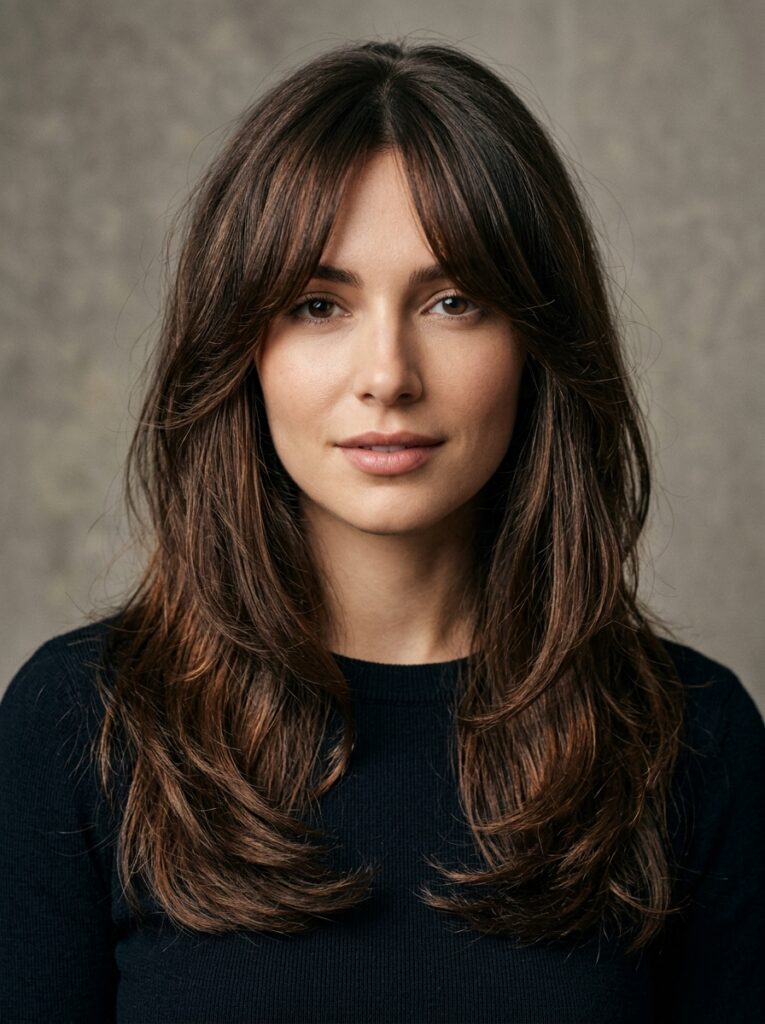
5. Sleek Straight U Cut
A sleek straight U cut highlights the haircut’s outline without relying on curls or dramatic layers. The smooth finish makes the curved ends easy to see, giving long hair a clean and refined appearance.
This is a good option for people who enjoy straight hairstyles and want a little more shape than a blunt cut provides. It works best when the ends are healthy and the curve is evenly blended.
Styling tip: Apply heat protectant before using a blow-dryer or flat iron. Finish with a small amount of smoothing serum, concentrating on the mid-lengths and ends.
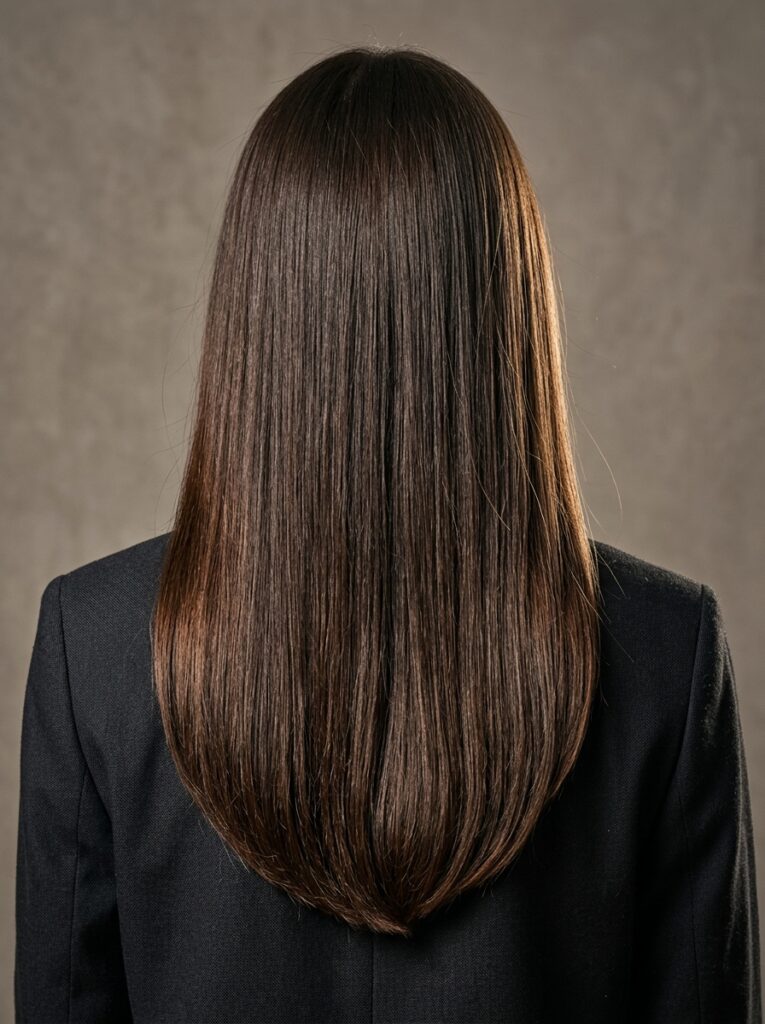
6. Soft Wavy U Cut
Soft waves bring extra dimension to the rounded shape of a U cut. The curved perimeter creates a flowing outline, while loose waves add texture and a relaxed finish.
This variation is suitable for naturally wavy hair and for anyone who enjoys styling their hair with a curling wand. It can look casual during the day and polished enough for special occasions.
Styling tip: Apply a lightweight mousse to damp hair, then air-dry or diffuse. If using a curling iron, alternate the direction of the waves for a more natural result.
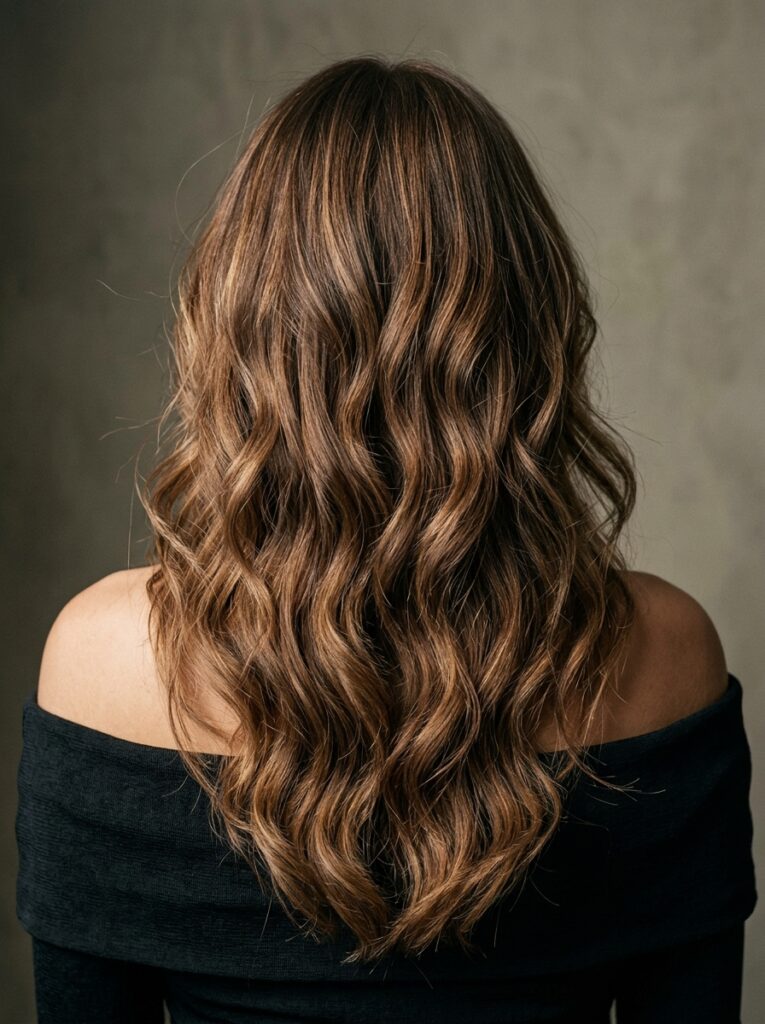
7. U Cut for Thick Hair
Thick hair can sometimes look bulky at the bottom, especially when it has a straight, heavy perimeter. A U cut introduces a softer outline, and carefully placed layers can help distribute the weight.
The key is to maintain enough fullness at the ends instead of removing too much hair. Your stylist can adjust the depth of the U and the amount of internal layering according to your hair density.
Styling tip: Use a smoothing cream or lightweight leave-in conditioner to help control frizz. Ask your stylist to remove bulk selectively rather than making the ends excessively thin.
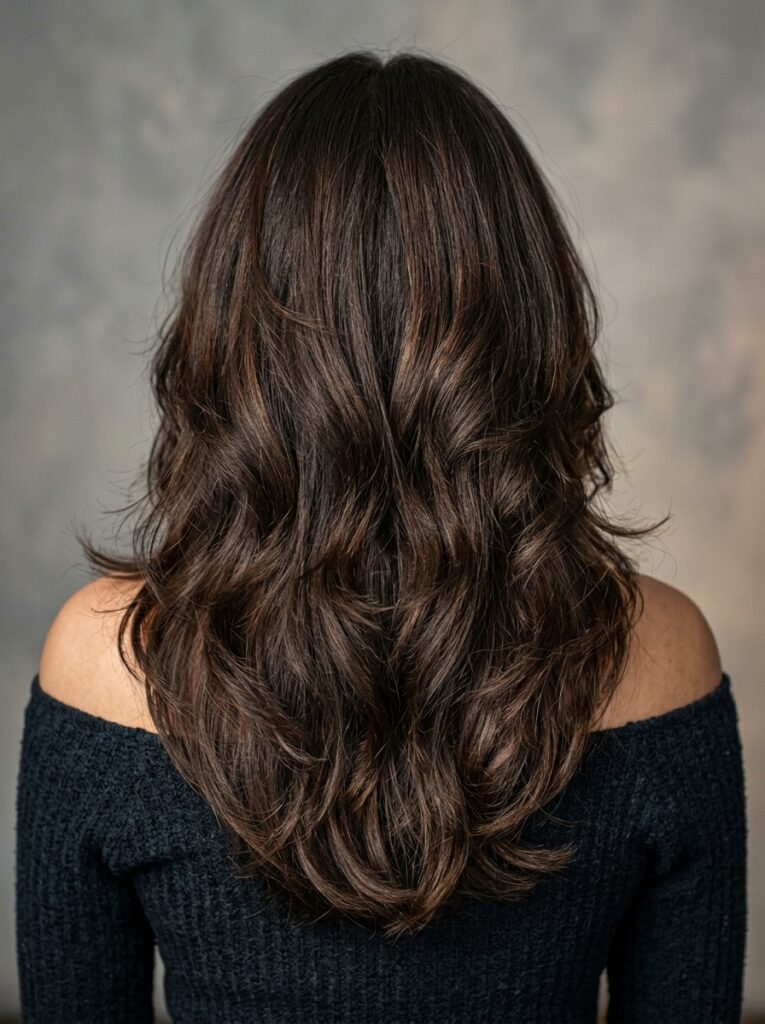
8. U Cut for Thin or Fine Hair
A gentle U-shaped haircut can be a good choice for fine hair because it keeps the outline relatively full. Instead of adding many short layers, this version focuses on a subtle curve and minimal layering.
Fine hair may look thinner if too much length and density are removed from the ends. A shallow U shape can offer definition while preserving a fuller-looking perimeter.
Styling tip: Use a lightweight volumizing mousse at the roots and avoid heavy oils near the scalp. Keep layers long and subtle if fullness is your priority.
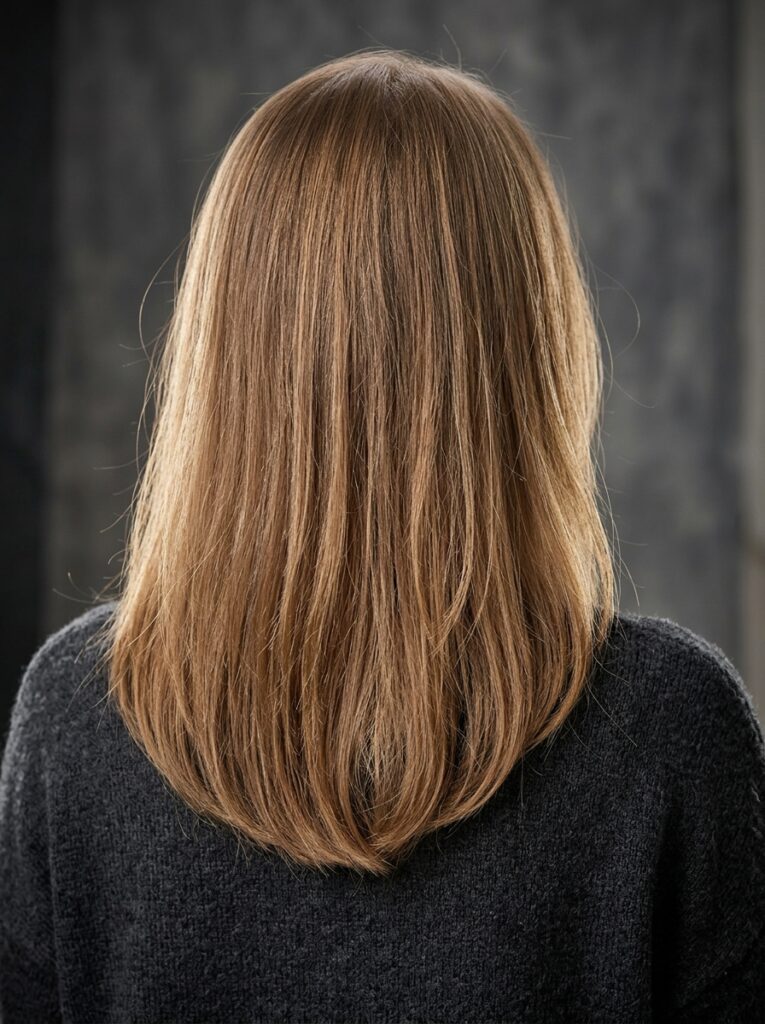
9. Medium-Length U Cut Hairstyle
You do not need waist-length hair to enjoy a U cut. On shoulder-length or collarbone-length hair, a gentle U-shaped perimeter adds softness and gives the ends a more rounded appearance.
This version is practical for anyone growing out a shorter haircut or looking for a manageable everyday style. You can wear it straight, with a slight bend, or in loose waves.
Styling tip: Use a round brush to curve the ends slightly inward or outward. Keep the shape subtle so the haircut looks balanced from the front and back.
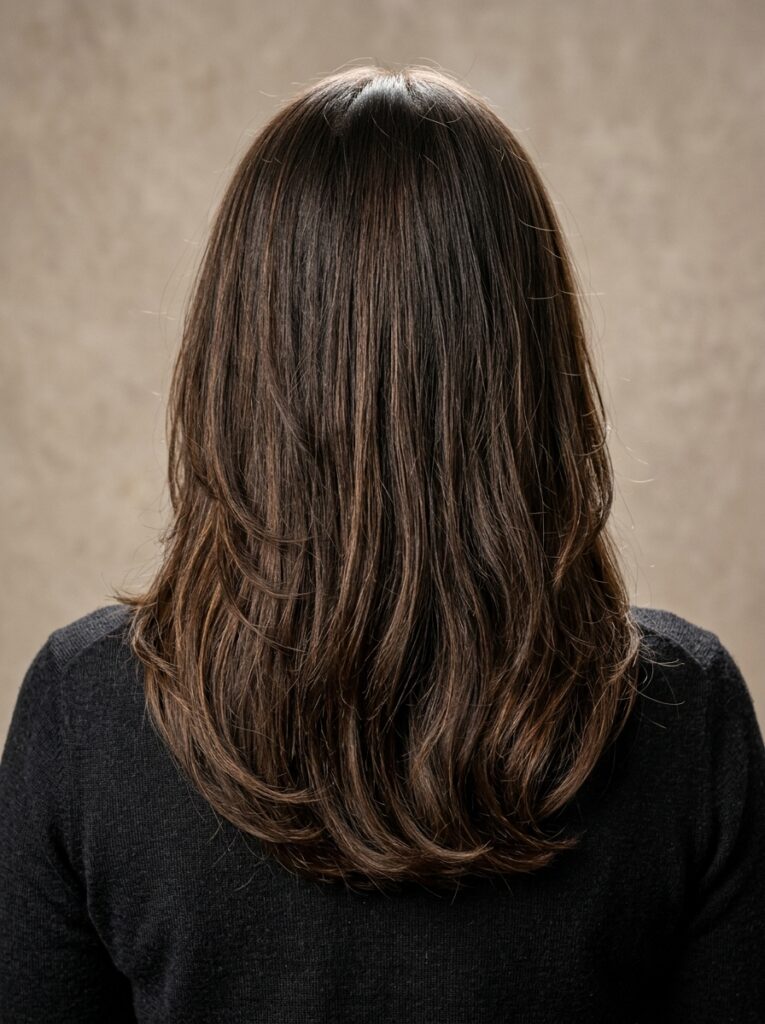
10. U Cut with Long Feathered Layers
Feathered layers give a U cut a light, airy finish. The pieces blend gradually into the longer sections, creating movement without making the haircut look overly choppy.
This style works well for people who like flowing hair with a little extra texture around the face and ends. It can be particularly attractive when styled with a soft blowout.
Styling tip: Use a round brush to lift the layers as you dry them. A light finishing spray can help preserve movement without making the hair stiff.
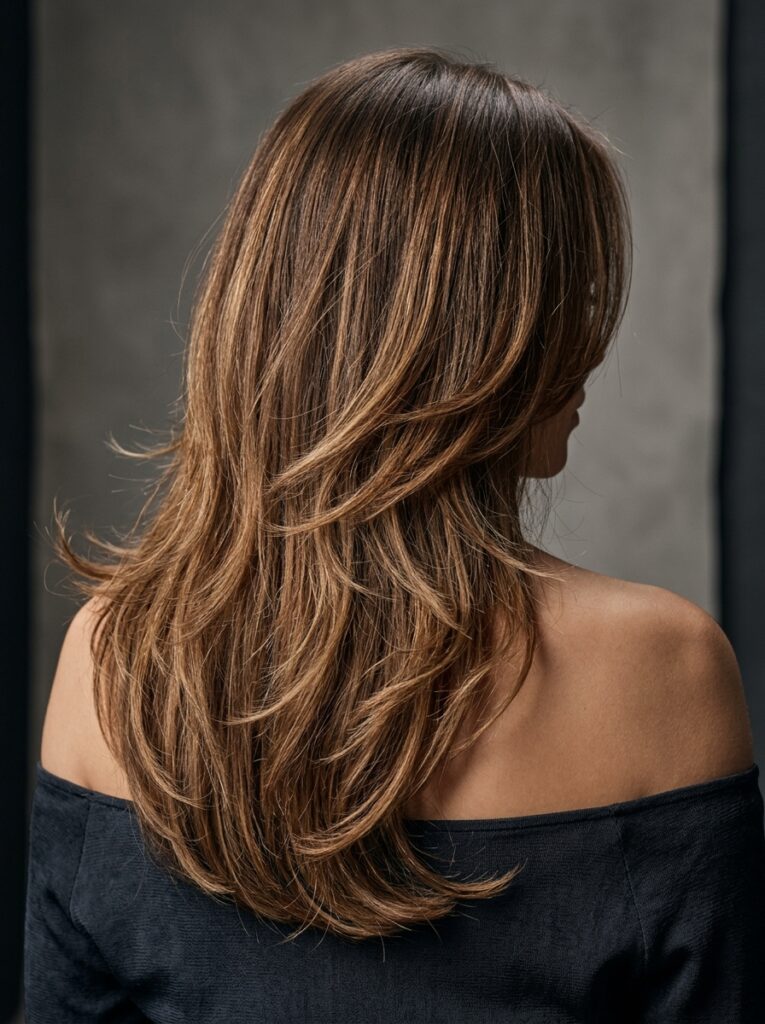
11. Deep U Cut Hairstyle
A deep U cut features a more pronounced curve, with the center-back section noticeably longer than the sides. This creates a defined, rounded outline that is easy to see when the hair is worn down.
It is a lovely option for very long hair when you want the shape to be more noticeable. However, the depth should be customized to your length and density so the sides do not look too short.
Styling tip: Wear the hair straight for a clear view of the shape or add large, loose waves for extra dimension.
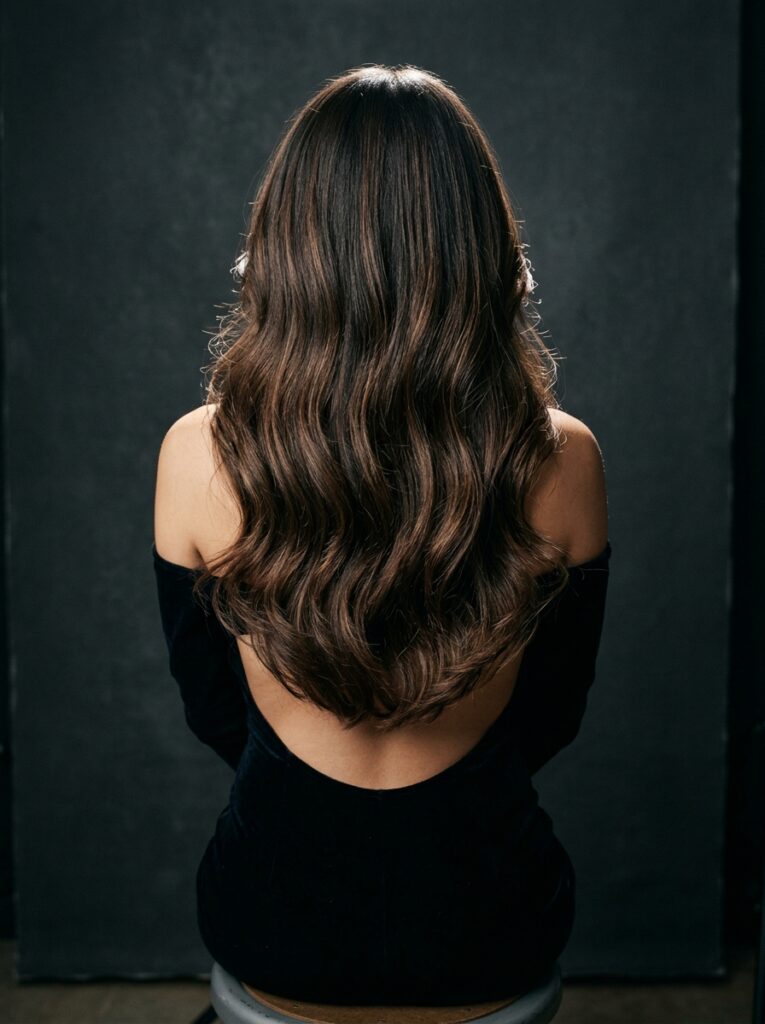
12. Subtle U Cut with Minimal Layers
If you prefer a low-maintenance haircut, consider a subtle U cut with very few layers. The perimeter has a soft curve, but most of the hair remains at a similar length.
This style is ideal for people who want a small change rather than a dramatic transformation. It also makes sense if you regularly wear ponytails, buns, or braids.
Styling tip: Let your natural texture guide the finish. A leave-in conditioner can help the hair sit smoothly without requiring extensive heat styling.
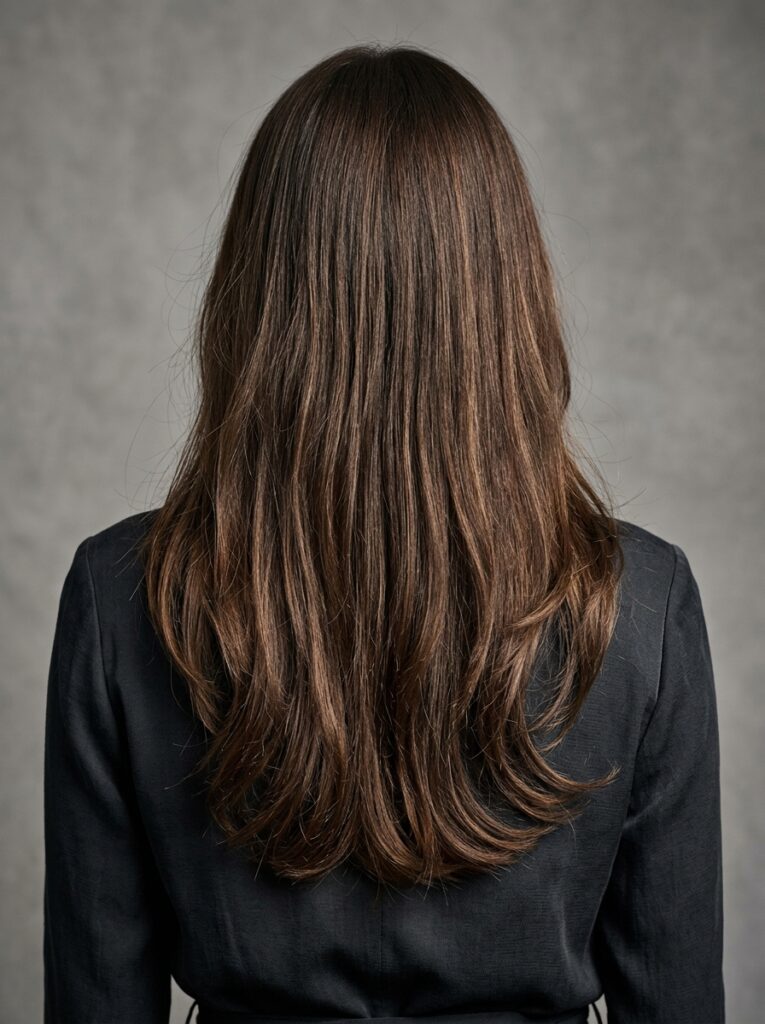
13. U Cut with Butterfly-Inspired Layers
Butterfly-inspired layers add shorter, face-framing pieces and longer layers throughout the hair. Combined with a U-shaped perimeter, they create a fuller, more voluminous look with movement around the face.
This variation suits people who love a bouncy blowout or a hairstyle that appears layered without losing the overall impression of long hair. It generally requires more styling than a simple U cut.
Styling tip: Use a round brush or large rollers to lift the shorter layers. Direct the face-framing sections away from the face for a soft, sweeping effect.
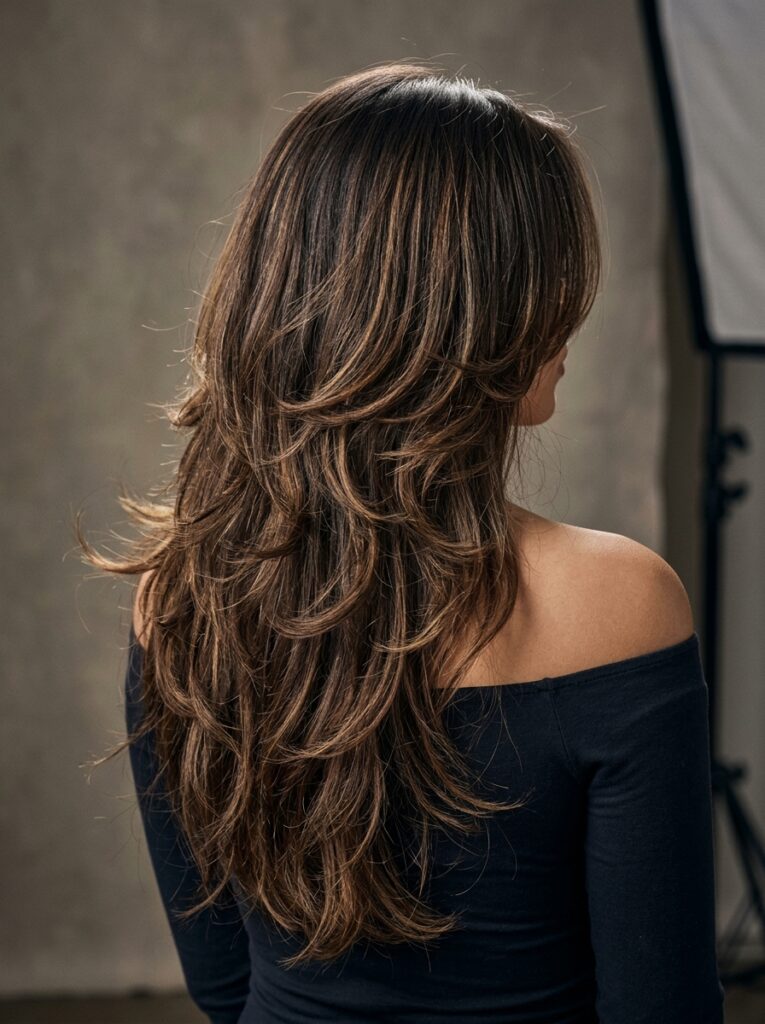
14. U Cut with Side-Swept Bangs
Side-swept bangs offer an alternative to a center-parted fringe. They move diagonally across the forehead and blend into the longer sections, adding asymmetry to the front while the U-shaped back keeps the look balanced.
This style can be tailored to subtle or more dramatic side bangs. It is especially useful if you enjoy changing your part or want a softer fringe without committing to a full set of bangs.
Styling tip: Blow-dry the bangs in the direction you want them to fall. Use a small amount of lightweight styling cream to control flyaways.
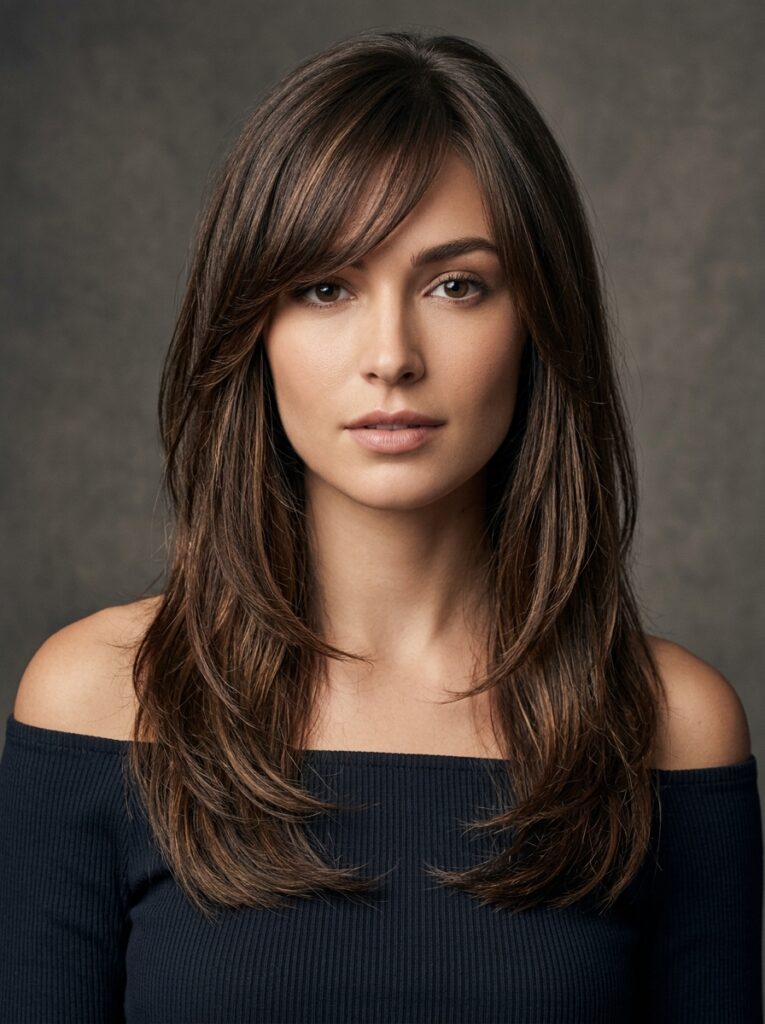
15. U Cut with Flipped-Out Ends
Flipped-out ends give a U-shaped haircut a playful, retro-inspired finish. The rounded outline becomes more noticeable as the ends turn outward, adding bounce and personality.
This look can be worn with medium or long hair and works well for casual outings, parties, and photo-ready styling. You can keep the flip subtle or make it more pronounced.
Styling tip: Use a round brush or flat iron to turn the ends outward. Apply heat protectant first and finish with a flexible-hold spray.
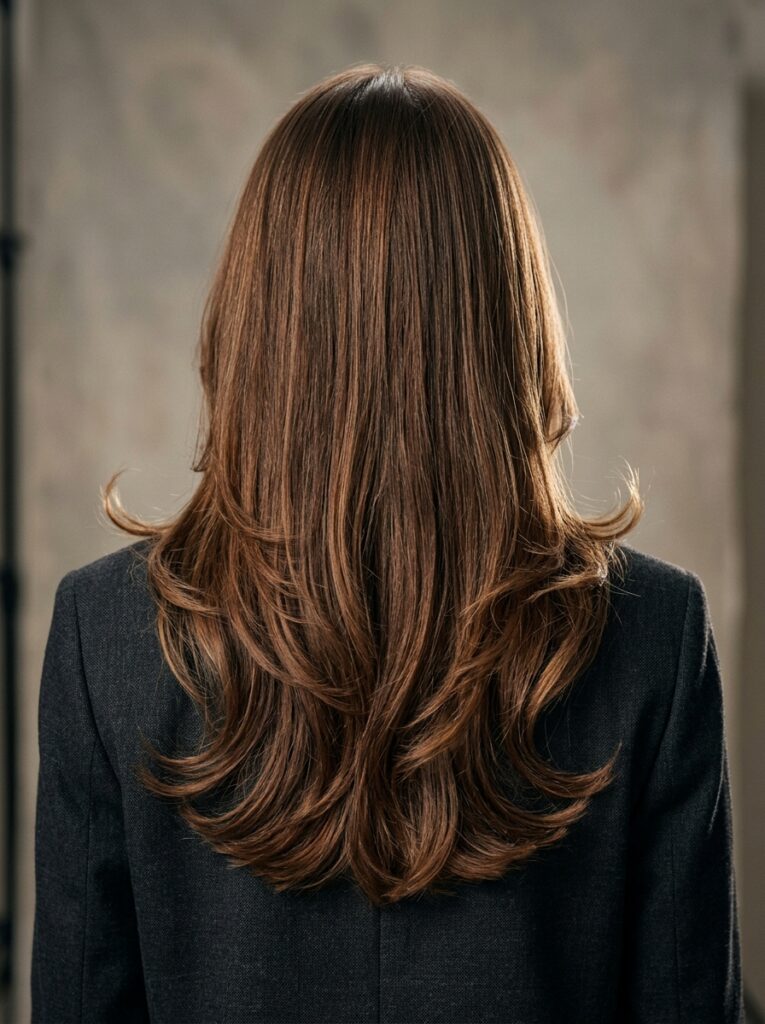
16. U Cut with Beach Waves
Beach waves create a relaxed, textured look that pairs beautifully with a U-shaped perimeter. The waves add dimension through the lengths, while the rounded back keeps the silhouette soft rather than pointed.
This variation is a good fit for bohemian-inspired outfits, vacations, and everyday styling. It can also make naturally wavy hair easier to showcase.
Styling tip: Apply a light texturizing product and scrunch gently while the hair dries. If your hair is straight, create loose bends with a curling wand and leave the ends slightly relaxed.
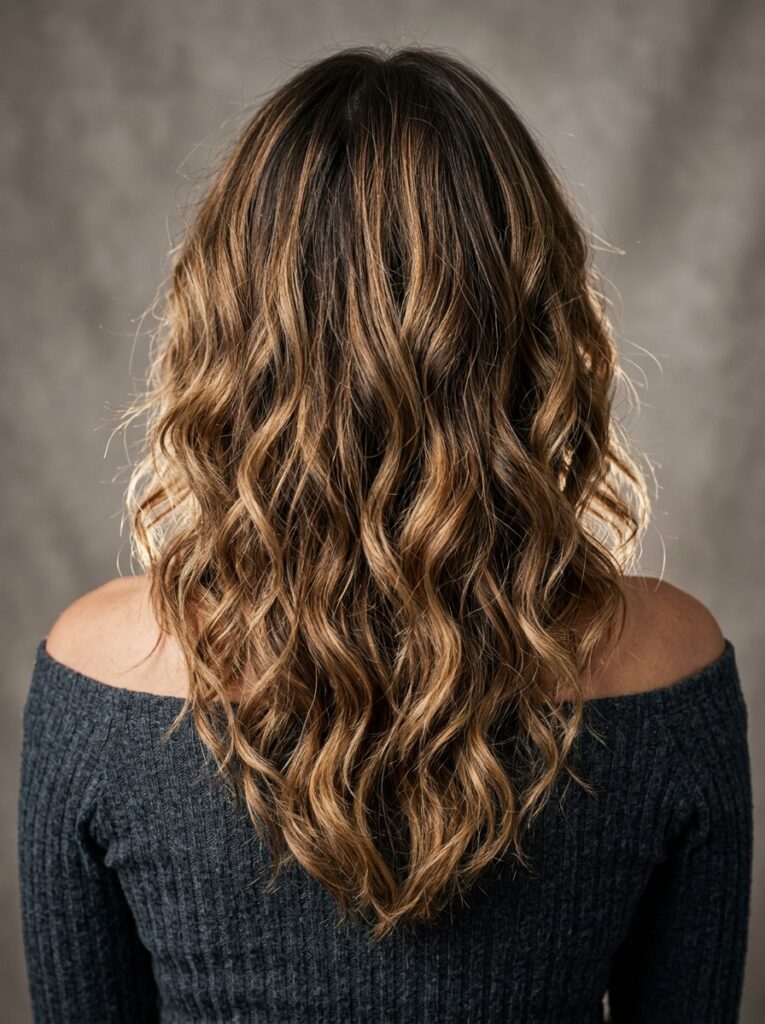
17. Curly U Cut Hairstyle
A U cut can also be adapted for naturally curly hair. The curved perimeter helps create a rounded outline, while layers can be added to support curl shape and manage bulk.
Curly hair can appear different when wet and dry, so it is important to discuss shrinkage and your preferred curl length with your stylist. The best shape depends on your curl pattern, density, and how you usually wear your hair.
Styling tip: Use a moisturizing leave-in product and curl cream. Let the curls air-dry or use a diffuser on a gentle setting, and avoid brushing them dry if that disrupts your curl pattern.
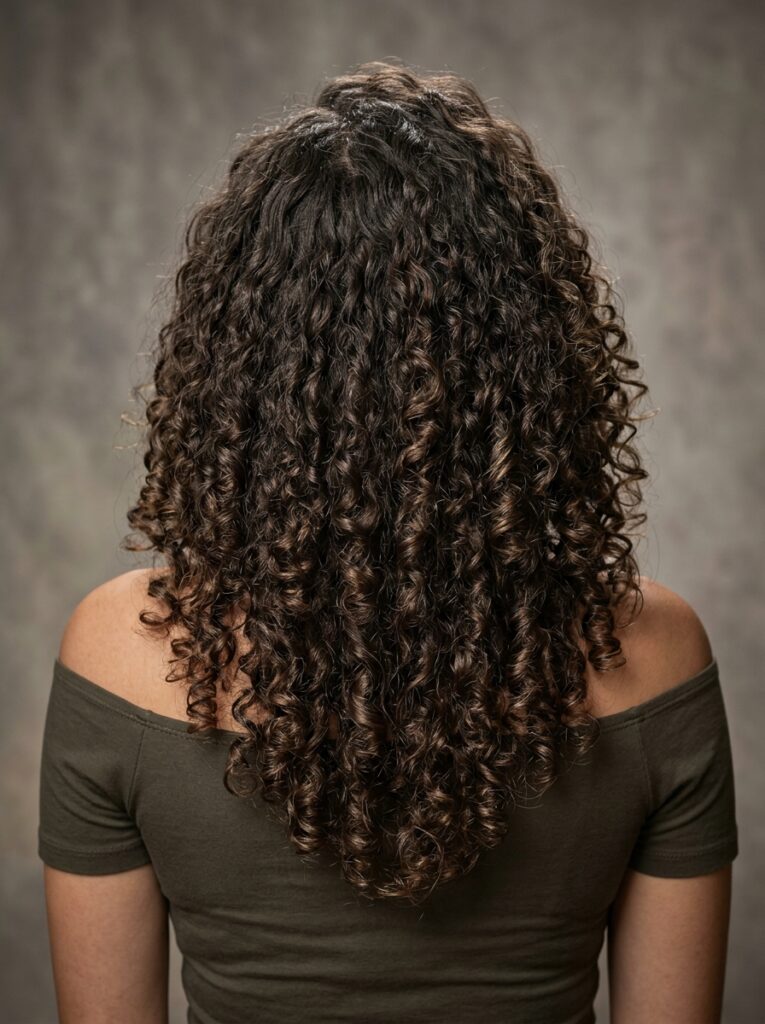
18. U Cut for Naturally Wavy Hair
Naturally wavy hair works beautifully with a soft U cut because the curved ends complement the hair’s natural movement. Light layers can enhance the waves without creating too much separation at the bottom.
This style is ideal if you want a relaxed finish that does not require perfectly straight or curled hair. It also offers flexibility for days when you want a more polished blowout.
Styling tip: Apply a lightweight wave-enhancing cream to damp hair and scrunch gently. Allow it to air-dry or use a diffuser to encourage definition.
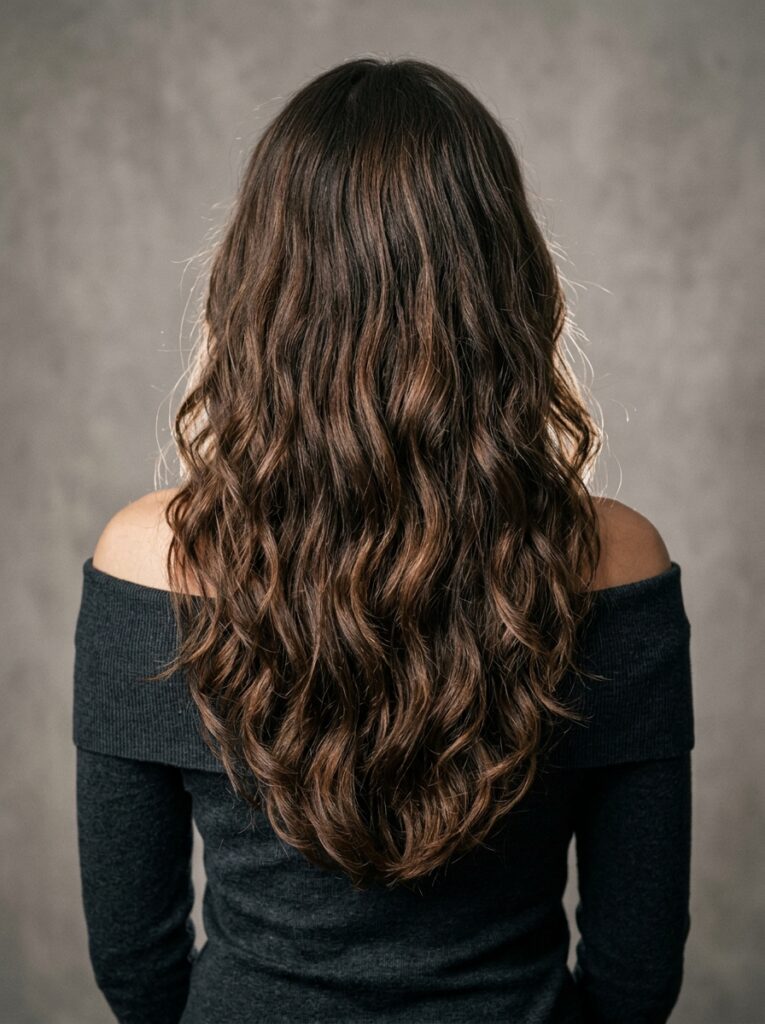
19. U Cut with Subtle Highlights
Subtle highlights add dimension to a U-shaped haircut by creating variations in tone throughout the lengths. The color can help individual layers and waves stand out, making the haircut appear more textured.
Caramel, honey, beige, or soft brown highlights can be adapted to your base color and preferred level of contrast. You do not need dramatic color changes to achieve a dimensional result.
Styling tip: Use color-safe shampoo and conditioner if your hair is colored. A smooth blowout or loose waves can help reveal the different tones.
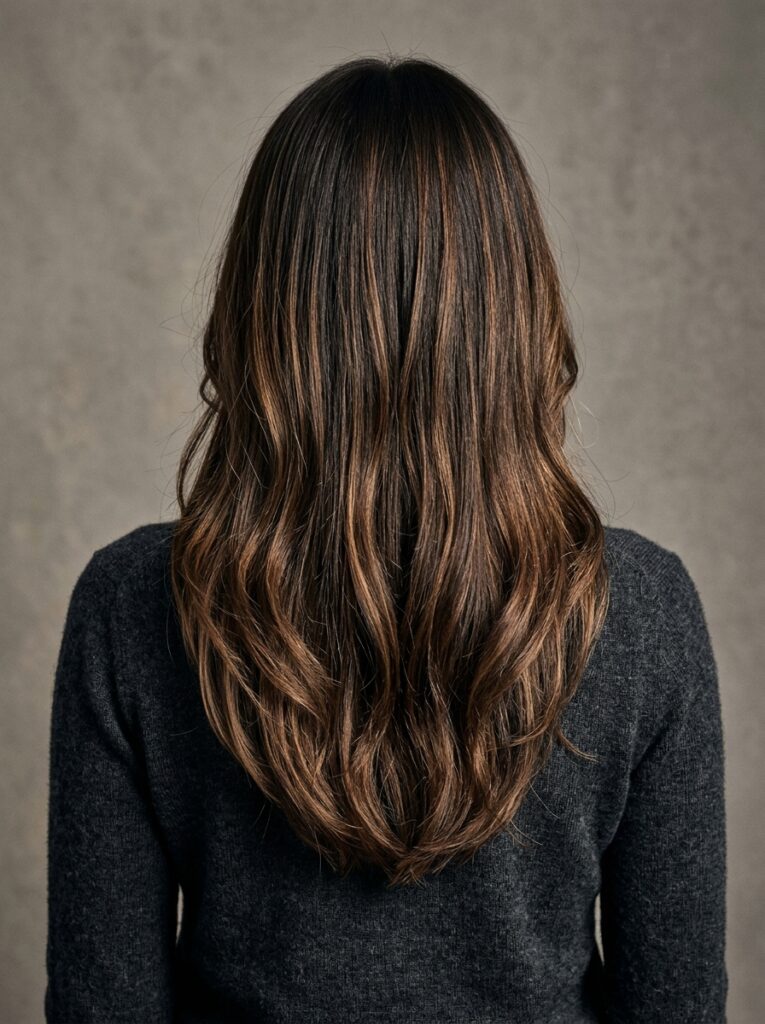
20. Low-Maintenance U Cut Hairstyle
A low-maintenance U cut focuses on a soft outline and minimal layering. The aim is to create a shape that falls naturally without requiring a complicated styling routine every morning.
This variation is a practical choice for busy schedules and people who prefer air-drying or simple blow-drying. It can also grow out more softly than a highly structured haircut.
Styling tip: Use a detangling product or lightweight leave-in conditioner after washing. Let your hair dry naturally when possible, and refresh the ends with a small amount of serum if needed.
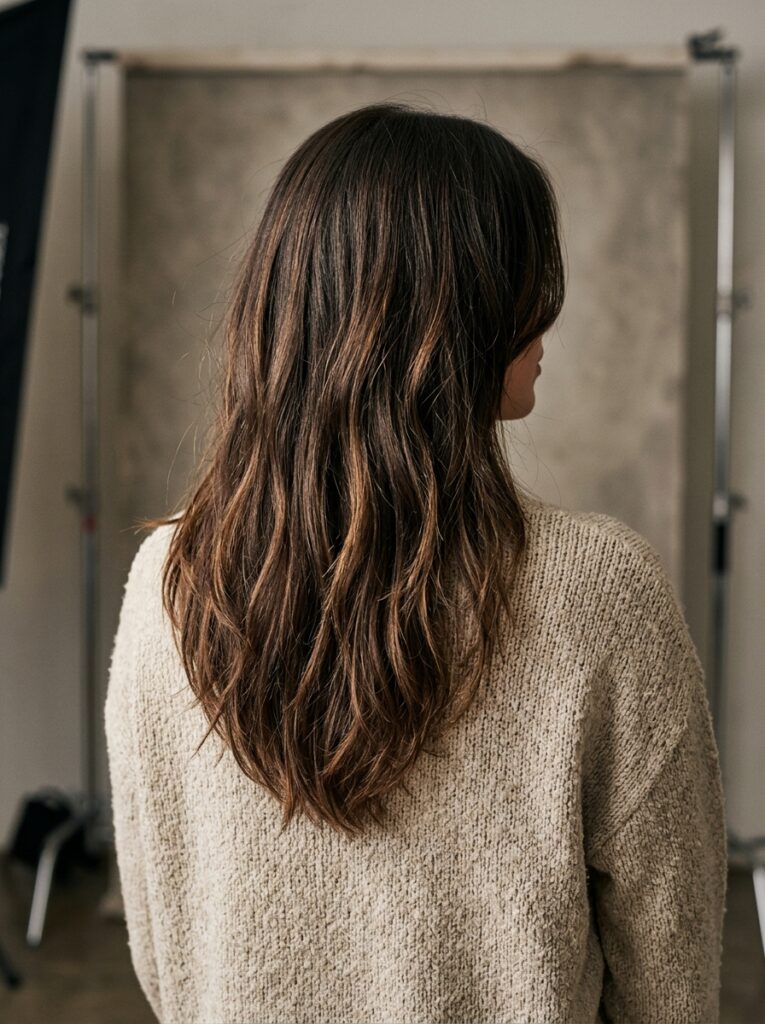
21. Glamorous U Cut Blowout
For a more polished look, style your U cut with a voluminous blowout. The roots have lift, the lengths appear smooth and bouncy, and the ends curve softly to emphasize the rounded silhouette.
This variation is perfect for weddings, celebrations, dinners, and special occasions. It works particularly well with long layers because the blowout brings out their shape and movement.
Styling tip: Apply heat protectant and volumizing mousse before blow-drying. Use a round brush to lift the roots and shape the ends, then allow the hair to cool before brushing through it.
U Cut vs. V Cut: What’s the Difference?
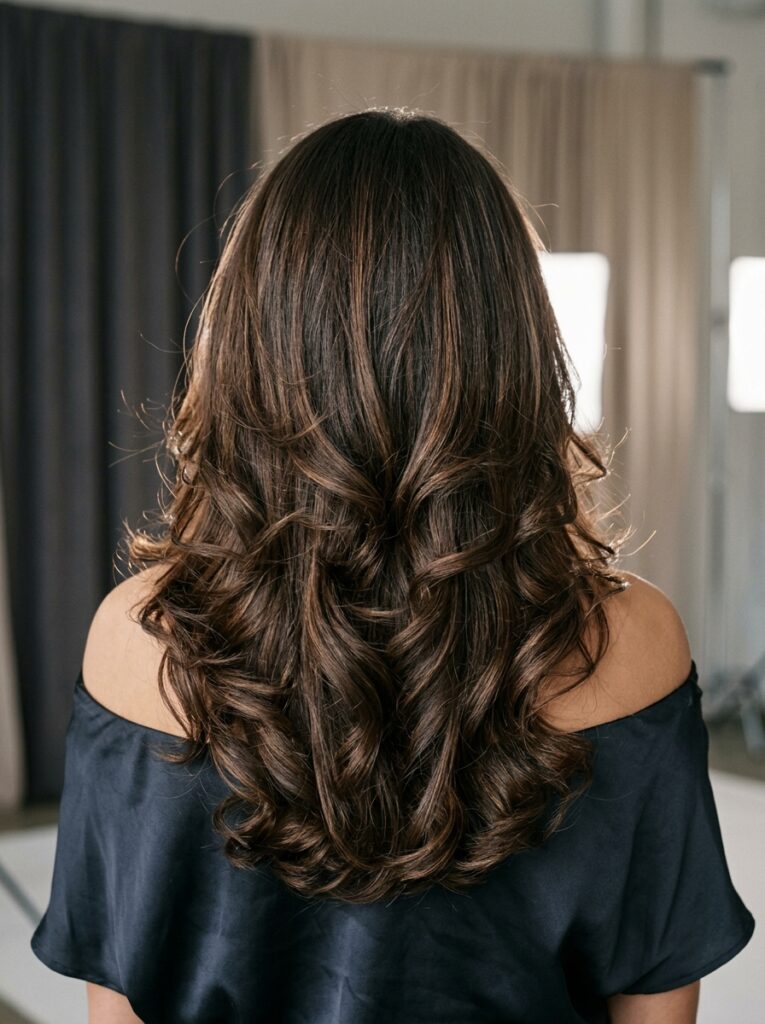
The main difference between a U cut and a V cut is the shape of the hair’s perimeter at the back.
| Feature | U Cut | V Cut |
|---|---|---|
| Back shape | Rounded curve | Tapered point |
| Overall appearance | Soft and balanced | Sharper and more dramatic |
| Length at the center | Slightly longer than the sides | More noticeably longer than the sides |
| End fullness | Often preserves a fuller outline | Can create a more tapered appearance |
| Best for | A rounded, flowing finish | A defined, pointed silhouette |
Neither haircut is automatically better. Choose a U cut if you prefer a gentle curve and a balanced outline. Consider a V cut if you want a sharper shape and more dramatic tapering at the back.
Which U Cut Hairstyle Is Best for Your Hair Type?
The best u cut hairstyle depends on your hair’s density, natural texture, length, and styling habits.
For Fine Hair
Choose a shallow U shape with minimal layers. Keeping the ends relatively full can help your hair look denser. Avoid excessive thinning or too many short layers if your priority is fullness.
For Thick Hair
A deeper U shape or carefully placed layers can help the hair move more naturally. Ask your stylist to reduce bulk strategically while preserving enough density at the ends.
For Straight Hair
A sleek U cut or subtle layered version makes the rounded outline easy to see. Face-framing layers can add detail without requiring curls or waves.
For Wavy Hair
A soft layered U cut complements natural movement. Choose blended layers that enhance your waves without making the ends look uneven.
For Curly Hair
Ask for a U-shaped outline customized to your curl pattern and shrinkage. A stylist experienced with curly hair can help balance the shape and avoid unwanted bulk.
For Long Hair
Long hair offers plenty of room to show the rounded perimeter. You can choose a classic U cut, a deep U, or a layered variation depending on how much movement you want.
How to Ask Your Hairstylist for a U Cut
Taking a reference photo to your appointment can help you explain the shape you want. Use these points to make the consultation easier:
- Explain the desired curve. Tell your stylist whether you want a subtle U or a deeper, more noticeable curve.
- Discuss your length. Decide how much length you want to preserve before cutting begins.
- Choose your layers. Explain whether you want a simple perimeter, long blended layers, or shorter face-framing pieces.
- Describe your usual styling routine. Mention whether you air-dry, straighten, curl, or wear your hair tied back most days.
- Talk about your natural texture. Your stylist should account for waves, curls, density, and shrinkage.
- Agree on the finish. Ask how the cut will look when styled naturally, not only after a salon blowout.
A simple way to describe your preference is: “I’d like a soft U-shaped perimeter that keeps my length, with subtle layers only where they will help my hair move naturally.”
How to Maintain a U Cut Hairstyle
A good haircut looks even better when you maintain the health and shape of your hair. These simple habits can help:
- Trim as needed: Many people schedule a trim around every 8–12 weeks, but the ideal timing depends on your hair’s condition and how precisely you want to maintain the shape.
- Condition regularly: Use a conditioner suited to your hair type, focusing on the lengths and ends.
- Limit excessive heat: Use heat protectant and avoid repeatedly applying high heat to the same sections.
- Detangle gently: Start at the ends and work upward to reduce unnecessary breakage.
- Choose suitable styling products: Fine hair often benefits from lightweight formulas, while thicker or curlier hair may need more moisture.
- Protect your hair overnight: A loose braid or a smooth pillowcase can help reduce tangling and friction.
- Communicate before each trim: Tell your stylist whether you want to keep the existing curve, add layers, or make the shape more pronounced.
Frequently Asked Questions About U Cut Hairstyles
1. What is a U cut hairstyle?
A U cut hairstyle has a rounded, U-shaped outline at the back. The center section stays longer while the sides gradually curve upward, creating a softer shape than a blunt or sharply pointed cut.
2. Is a U cut good for long hair?
Yes. A U cut is particularly popular for long hair because it adds shape while preserving much of the length. You can keep it simple or combine it with long layers and face-framing pieces.
3. Does a U cut make hair look thicker?
A U cut can help the ends appear fuller when the curve is subtle and the perimeter retains enough density. However, the result depends on your hair’s natural thickness and the amount of layering.
4. Is a U cut better than a V cut?
It depends on your preferred look. A U cut creates a rounded, balanced outline, while a V cut produces a more pointed shape. Choose the one that complements your desired silhouette and hair density.
5. Can I get a U cut with layers?
Absolutely. A layered U cut combines the rounded perimeter with shorter sections throughout the hair. Long, blended layers provide movement, while face-framing layers add softness around the face.
6. Is a U cut suitable for thin hair?
Yes, especially when the shape is subtle and the ends remain relatively full. Fine hair often benefits from minimal layering rather than excessive thinning.
7. Can curly hair have a U cut?
Yes. A U-shaped perimeter can be adapted for curly hair. Your stylist should consider your curl pattern, shrinkage, density, and how you normally wear your curls.
8. How often should I trim a U cut?
Many people maintain their U cut with trims around every 8–12 weeks. You may need trims sooner if you notice split ends or want to preserve a precise shape.
9. Does a U cut require daily styling?
No. A simple U cut can be very easy to maintain, especially if it works with your natural texture. More layered or voluminous versions may require additional blow-drying or styling.
10. Which bangs look good with a U cut?
Curtain bangs and side-swept bangs are popular options because they blend naturally with face-framing layers. The best choice depends on your preferred part, hair texture, and styling routine.
Final Thoughts
A u cut hairstyle is a versatile way to refresh your hair without giving up the length you love. Its soft, rounded outline works with many different looks, from sleek straight hair to flowing waves, layered blowouts, and natural curls.
For a classic finish, choose a simple U-shaped perimeter. If you want extra movement, consider long layers or face-framing pieces. Fine hair may benefit from a subtle shape with minimal layering, while thick hair can often accommodate more strategic layers.
The best haircut is one that complements your natural texture and fits your everyday routine. Bring a reference photo to your stylist, discuss how much length you want to preserve, and customize the curve to achieve a U cut that feels right for you.