

If you love haircuts that look artistic, unexpected, and completely different from traditional layers, jellyfish hair may be the statement style you have been looking for. The haircut combines a dramatically shorter upper section with noticeably longer hair underneath, giving you the effect of wearing a bob and long hair at the same time. The silhouette is what gives this haircut its name. The short upper section resembles the rounded bell of a jellyfish, while the longer pieces underneath create the impression of flowing tentacles. Unlike a shag or wolf cut, where the layers usually connect gradually, the jellyfish haircut is intentionally disconnected. That visible difference between the two lengths is the defining feature of the style. Modern versions can be sharp and architectural, soft and wearable, straight and glossy, curly and voluminous, or enhanced with contrasting color. The length of the upper section can also change the entire appearance of the haircut, which means there is far more room for customization than the dramatic social-media versions might suggest.
Here are 25 jellyfish hair ideas to help you decide which interpretation could work for your hair.
What Is Jellyfish Hair?
Jellyfish hair is a two-level haircut in which the upper section is cut significantly shorter than the hair underneath. The top often resembles a bob, bowl, or rounded cap that ends somewhere between the ears and chin, while the lower section remains shoulder-length, mid-back, or even waist-length. The important detail is the lack of traditional blending. A stylist normally preserves a noticeable break between the short and long portions rather than gradually connecting them. Glamour describes it as an unblended bob with longer disconnected sections underneath, while L’Oréal similarly identifies the deliberate separation between the two layers as what distinguishes it from a wolf cut. That basic structure can then be customized with bangs, texture, color, different upper-layer lengths, or different amounts of hair left in the lower section.
1. Classic Blunt Jellyfish Hair
The classic blunt jellyfish haircut shows the structure of the style as clearly as possible. The upper section forms a sharp bob around the jaw or chin, while the lower hair remains considerably longer and falls straight underneath.
Straight styling makes the difference between the two sections especially noticeable. Because there is little softness or blending, the clean horizontal edge of the upper layer becomes the main feature of the haircut. This is a strong option if you want the jellyfish shape to look deliberate and fashion-forward rather than subtle.

2. Soft Rounded Jellyfish Cut
A soft rounded jellyfish cut keeps the distinctive two-level shape but makes the upper section less severe. Instead of creating a completely straight blunt line, the short hair curves gently around the head and face. This rounded finish can make the haircut feel more wearable while still preserving enough separation from the longer hair underneath. Styling the short ends slightly inward with a round brush can emphasize the bell-like shape without making the haircut look overly rigid.

3. Long Jellyfish Hair
You do not need to sacrifice your long hair to experiment with the jellyfish trend. A long version keeps the lower section at mid-back, waist, or even longer while dramatically shortening only the hair through the upper portion. The greater the distance between the short bob section and the bottom length, the stronger the visual contrast becomes. Long-hair jellyfish variations remain a prominent part of current hairstyle galleries because the extreme difference in proportion makes the structure especially noticeable.

4. Short Jellyfish Haircut
A short jellyfish haircut reduces the overall length while still maintaining two separate levels. The upper portion might sit around the ears or cheekbones, while the lower section reaches the shoulders or collarbone. Because the total length is shorter, the stylist needs to preserve enough distance between the two sections. If the lengths become too similar, the style can begin to look like an ordinary layered bob rather than a jellyfish haircut.

5. Jellyfish Hair With Curtain Bangs
Curtain bangs offer a softer way to frame the front of a jellyfish cut. They open through the center and gradually become longer toward the cheekbones, where they can blend visually into the short upper section. This fringe works especially well when you like the two-layer concept but do not want the strong horizontal line created by blunt bangs. Curtain bangs also introduce additional movement around the face without weakening the main short-over-long silhouette.

6. Jellyfish Hair With Blunt Bangs
Blunt bangs emphasize the geometric quality of jellyfish hair. The straight fringe creates another clearly defined horizontal line that complements the sharp edge of the upper bob. When paired with smooth, straight styling, this can produce one of the most graphic versions of the haircut. The trade-off is maintenance: a blunt fringe normally shows growth quickly, so keeping that precise shape may require more regular attention.

7. Jellyfish Cut With Micro Bangs
Micro bangs make the haircut even more experimental. The very short fringe sits high on the forehead, followed by the bob-like upper section and then the dramatically longer hair underneath. Those different length levels give the style a deliberately unconventional appearance. Micro bangs can change noticeably with even a small amount of growth, so it is worth choosing the exact fringe length carefully before making the cut.
8. Hime-Inspired Jellyfish Hair
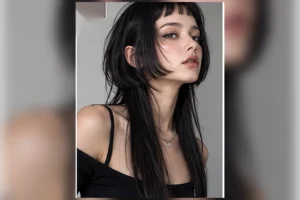
Jellyfish hair is frequently associated with the Japanese hime cut because both styles use visibly disconnected lengths. The modern jellyfish interpretation, however, generally extends the shorter section farther around the head, while the traditional hime style is especially recognizable for blunt shorter sections around the sides of the face. Combining the two ideas can create strong cheek- or jaw-length panels at the front while preserving long hair through the back. This variation works especially well when you want a precise, graphic result.

9. Sleek Straight Jellyfish Hair
Straight hair displays the construction of a jellyfish cut particularly clearly. When both the bob section and the long underlayer are smooth, the visible break between them becomes impossible to miss. A sleek finish can make the haircut appear polished rather than messy, which is useful when you want an unconventional cut with a controlled appearance. Shine serum or lightweight smoothing products can further emphasize the clean lines without overwhelming the hair.

10. Soft Wavy Jellyfish Hair
Adding waves changes the personality of jellyfish hair almost immediately. Instead of emphasizing perfectly straight horizontal lines, gentle bends create softness and movement throughout the two sections. Loose waves through the longer hair can make the lower layer feel more flowing, while subtle texture through the short section reduces the severity of the bob shape. The key is keeping enough separation between the lengths so the jellyfish structure remains recognizable.

11. Curly Jellyfish Hair
Curly hair creates a much fuller interpretation of this haircut. The short upper section can develop significant volume, while longer curls underneath create a completely different type of movement from the traditional sleek version. Recent stylist guidance confirms that the jellyfish cut can be adapted to curls, though styling and layer placement need to account for natural texture and density. Shrinkage is particularly important. A short upper layer may spring considerably higher after drying, so your stylist should evaluate where the curls naturally sit before deciding on the final length.

12. Jellyfish Hair for Fine Hair
Fine hair requires careful sectioning because both levels need enough density to look intentional. If too much hair is used to create the short top layer, the long section underneath may begin to look overly thin. A softer perimeter and a slightly less extreme difference between the two sections can create a more balanced appearance. Lightweight volumizing products can also help give the upper area shape without flattening fine strands.

13. Jellyfish Hair for Thick Hair
Thick hair offers plenty of density for creating two substantial sections. The short upper portion can remain full and rounded while the lower hair still retains enough thickness to create strong movement. However, the top may require some controlled internal weight removal to prevent it from becoming excessively bulky. The goal should be to shape the short section without softening the length break so much that the jellyfish effect disappears.

14. Jellyfish Hair With Face-Framing Pieces
Face-framing pieces can make the front of the haircut feel softer without changing the dramatic separation through the rest of the head. Shorter sections can begin around the cheekbones or jaw and interact with the upper bob. Instead of creating one heavy line directly beside the face, these smaller pieces introduce movement and allow you to personalize where the haircut draws attention.

15. Chin-Length Jellyfish Bell
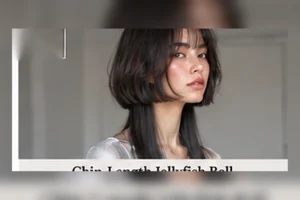
A chin-length upper section offers a balanced way to wear jellyfish hair. The short portion resembles a recognizable bob, while the much longer hair underneath creates the unexpected element. This length provides enough room for the ends to curve naturally around the face while remaining distinctly shorter than the underlayer. It can also work with blunt bangs, curtain bangs, or no fringe at all.
16. Ear-Length Jellyfish Top
If you want something much more dramatic, move the upper section higher so it finishes near or just below the ears. The shorter the top becomes, the greater the visible gap between the two sections. This creates a bold silhouette with a strong editorial quality. Because considerably more hair needs to be cut short, this version requires more commitment than a jaw- or chin-length interpretation.

17. Jellyfish Hair With Shoulder-Length Tentacles
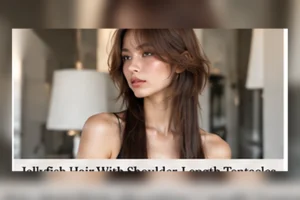
The lower section does not necessarily need to reach your waist. Keeping the long portion around shoulder or collarbone length creates a compact version of the same two-level idea. This variation can work especially well if you already have medium-length hair and do not want to wait for significant additional growth before trying the trend. The top should still remain sufficiently shorter so the shape reads as deliberately disconnected.
18. Waist-Length Jellyfish Hair
Waist-length hair creates maximum contrast against a short upper bob. The top appears almost to float above the very long lower lengths, closely reflecting the bell-and-tentacle inspiration behind the haircut. The long section can be styled straight for a particularly graphic appearance or with subtle waves for additional movement. This version is ideal if keeping your overall length is one of your main priorities.

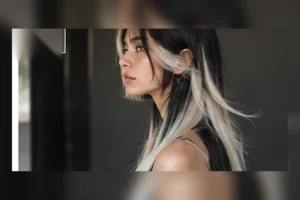
19. Two-Tone Jellyfish Hair
A two-tone color scheme can make the haircut’s structure even more obvious. One color can be applied to the short section while a contrasting shade appears through the longer underlayer. The combination could be subtle, such as dark brunette with caramel, or deliberately dramatic with black, platinum, red, pink, or another bold shade. L’Oréal also notes that contrasting and vivid color can be used to emphasize the two-part structure of the cut.

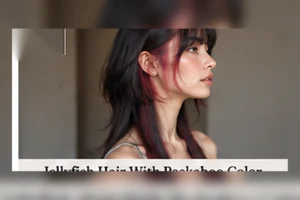
20. Jellyfish Hair With Peekaboo Color
Peekaboo color provides a less permanent-looking way to highlight the lower section. Keep the upper bob close to your natural shade while coloring selected strands underneath. Because the lower hair is partly concealed by the short top, the contrasting color becomes more noticeable as the hair moves. Copper, blonde, red, blue, pink, and other contrasting shades can all create different effects without requiring the entire haircut to be recolored.
21. Razor-Textured Jellyfish Top
Although the classic jellyfish cut often relies on blunt edges, the top can also be textured for a lighter appearance. When suitable for the hair type, controlled razor or texturizing work can soften the ends and prevent the upper section from looking too heavy. The important thing is maintaining the recognizable separation between short and long hair. Too much blending can turn the haircut into a different layered style.

22. Soft Korean-Inspired Jellyfish Cut
A Korean-inspired interpretation can soften the dramatic structure with airy fringe, subtle curves, and polished face-framing pieces. The upper section still remains clearly shorter, but the perimeter does not have to appear extremely blunt. Light styling and gentle inward bends can give the haircut a more delicate appearance while preserving the unusual two-level silhouette.

23. Jellyfish Bob Hybrid
A jellyfish bob hybrid makes the short upper shape the dominant part of the hairstyle. The top resembles a strong jaw- or chin-length bob, while selected sections underneath remain significantly longer. This can be an approachable version for someone who already likes bob haircuts but wants to introduce a more experimental detail. The longer pieces create the surprise without completely changing the recognizable bob foundation.

24. Soft Low-Maintenance Jellyfish Hair
The sharper the haircut, the more obvious changes in growth tend to become. A softer jellyfish variation can therefore be easier to live with day to day. The upper section can have slightly curved or textured ends instead of a razor-sharp perimeter, while the lower hair follows its natural straight, wavy, or curly texture. The two areas should remain visually separate, but neither needs to look perfectly sculpted every morning.

25. Edgy Graphic Jellyfish Cut
The edgy graphic version fully embraces everything that makes jellyfish hair unusual. A short, sharply defined upper bob can be paired with blunt or micro bangs and extremely long, straight underlayers. Rather than trying to hide the disconnection, this haircut makes it the focal point. Strong lines, glossy styling, contrasting color, or intentionally thin lower “tentacles” can all make the final shape feel more editorial.
How to Choose Jellyfish Hair for Your Hair Type
Hair texture has a major influence on how clearly the two levels appear. Straight hair usually displays the separation most strongly because the short and long sections maintain clean outlines. Wavy hair softens the structure, creating a more relaxed interpretation while still preserving visible contrast. Curly and coily hair can also wear jellyfish cuts, but shrinkage and volume need to be considered carefully. Current hairstylist guidance recommends adapting styling to the texture rather than assuming the sleek straight version is the only option.
Density matters too. Fine hair requires careful distribution so the underlayer does not become sparse, while very thick hair may need strategic weight removal through the short section.
To keep your short curls healthy, moisturized, and easier to manage, follow these dermatologist-recommended curly hair care tips.
Does Face Shape Matter With a Jellyfish Haircut?
The haircut can be customized instead of being limited to one particular face shape. The most useful decision is where the short perimeter should fall. A cheekbone-level upper section draws more attention toward the center of the face, while a jaw- or chin-length section emphasizes the lower face. Bangs change the proportions further: curtain bangs create softer diagonal movement, blunt bangs add a strong horizontal line, and leaving the forehead open creates more vertical space. Rather than treating face shape as a strict rule, use the position of the top layer and fringe to decide what features you want the haircut to highlight.
What to Ask Your Stylist for Jellyfish Hair
The phrase jellyfish haircut can mean different things to different stylists, so reference images are extremely useful. Explain that you want two intentionally disconnected sections rather than traditional blended layers. Be specific about where the upper section should end, how long the lower hair should remain, how much density you want in each section, and whether the top should be blunt, curved, or textured. Recent salon guidance also recommends being explicit about the amount of disconnection because blending the layers too heavily changes the defining silhouette.
Your normal styling routine should also be part of the conversation. A cut designed for sleek straight styling may need a different shape from one intended for natural curls or air-dried waves.
How to Style Jellyfish Hair
For the classic appearance, concentrate on keeping the upper section smooth and clearly defined. A round brush can curve the short ends inward and reinforce the bell shape, while the long pieces underneath can remain straight. For a softer interpretation, add gentle bends or waves to the long section and allow some natural texture through the top. On curly hair, a diffuser and texture-appropriate styling cream can encourage definition while maintaining the difference between the two sections. Current stylist advice similarly recommends adapting the styling technique to straight, wavy, and curly textures.
Whichever finish you choose, the goal is not necessarily to make both sections look identical. The contrast is what gives the haircut its character.
How to Maintain a Jellyfish Haircut
Maintenance depends heavily on how precise your version is. A sharp bob section and blunt fringe will show growth faster than a textured or softly rounded interpretation. Recent celebrity-stylist guidance suggests approximately six to eight weeks between trims when maintaining a defined jellyfish shape, although your own schedule may vary depending on hair growth and how much grow-out you like.
The longer underlayer usually needs less structural maintenance because it can continue growing without changing the fundamental idea of the cut. Most reshaping is concentrated around the short top, fringe, and face-framing areas.
Jellyfish Hair vs. Wolf Cut
Both styles use dramatic differences in length, but the construction is very different. A wolf cut normally uses multiple textured layers that connect through the hair, creating a shaggy progression from short crown pieces toward longer ends. Jellyfish hair deliberately interrupts that progression. The short top and long underlayer remain visibly separated. L’Oréal specifically describes this intentional disconnection as the main distinction between a jellyfish cut and a wolf cut. If you prefer continuous movement and shaggy texture, a wolf cut may suit your taste better. If you want strong geometry and obvious length contrast, the jellyfish cut delivers that effect more clearly.
Jellyfish Hair vs. Shag
A shag typically distributes many different layer lengths throughout the entire haircut so they move into one another. Even a heavily layered shag usually maintains some type of visual transition between shorter and longer pieces. The jellyfish haircut intentionally preserves the break. The upper section appears almost like a separate haircut sitting above the longer hair. That is why overly blending the two sections can remove much of what makes the style recognizable.
Is Jellyfish Hair High Maintenance?
It can be, but not every version requires the same amount of work. A very geometric haircut with blunt bangs, sleek styling, and a precise jaw-length line requires more regular attention than a softly textured variation worn with natural waves. One advantage is that most of the structural maintenance is concentrated around the short section. The lower “tentacle” pieces can generally continue growing. Glamour notes that the longer back section can be allowed to grow while the front and sides receive most of the upkeep.
Frequently Asked Questions About Jellyfish Hair
Why Is It Called Jellyfish Hair?
The name refers to the silhouette of the haircut. The short rounded section resembles the bell or body of a jellyfish, while the longer strands underneath resemble its trailing tentacles.
Is Jellyfish Hair Still Popular?
The style continues to receive fresh coverage in 2026, including a celebrity-hairstylist guide published in September 2026 and updated hairstyle galleries earlier this year.
Can You Get Jellyfish Hair Without Bangs?
Yes. Bangs are not required. A center part, side part, or longer face-framing pieces can be used with the short upper layer while leaving the forehead open.
Can Curly Hair Have a Jellyfish Cut?
Yes. The main challenge is accounting for shrinkage and volume so the two levels remain visible after the curls dry. The result will usually look softer and fuller than the classic straight version.
Is Jellyfish Hair Good for Long Hair?
Yes. Long hair can actually create one of the strongest versions because the difference between a chin-length top and waist- or mid-back-length bottom becomes very noticeable.
What Is the Difference Between Jellyfish Hair and a Hime Cut?
They share visual similarities and hime styling is an important influence on modern jellyfish cuts. However, a hime cut is commonly identified by shorter blunt sections framing the face alongside long hair, while a jellyfish haircut usually creates a broader short upper level around the head.
Can Fine Hair Wear a Jellyfish Cut?
Yes, but the hair needs to be divided carefully. Leaving enough density in the lower section helps prevent the long strands from appearing too thin.
How Do You Grow Out Jellyfish Hair?
The short upper section eventually needs to catch up with the lower length. During that process, a stylist can gradually reshape the haircut into a bob, shag, or conventional layered style. Another option is eventually cutting the long underlayer to meet the upper section and transitioning into a bob.
Final Thoughts
Jellyfish hair stands out because it deliberately does something that most traditional haircuts try to avoid: it creates a visible break between two completely different lengths. A rounded or blunt short section provides structure around the head and face, while the long hair underneath preserves movement and dramatic length.
That basic idea can be interpreted in dozens of ways. You can keep it sleek and geometric, soften it with waves, adapt it for natural curls, introduce curtain or micro bangs, use contrasting colors, or make the upper section longer for a more wearable everyday version.
The most important decision is how much contrast you actually want. A dramatic ear-length top over waist-length hair creates a very different result from a soft chin-length bob over shoulder-length pieces. Once you decide on those proportions and communicate them clearly to your stylist, the haircut can be shaped around your texture, density, and styling routine rather than simply copying one reference photo.
This gives your article a broader SEO footprint than the competitor’s 20 mostly visual variations because it targets not only jellyfish hair ideas, but also the related questions people search before committing to the haircut: what it is, who it works for, styling, hair types, maintenance, salon instructions, wolf-cut differences, hime-cut differences, and grow-out.